Foermality Rounded Outline: A Practical Guide to Modern Display Typography
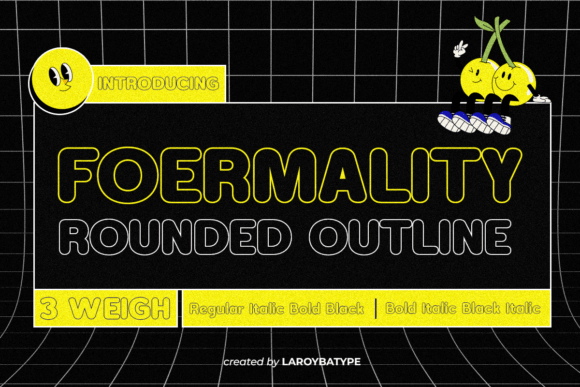
Foermality Rounded Outline captures a specific intersection of nostalgia and futurism that defines much of today’s visual culture. As a modern rounded outline display font, it balances a fun, bold personality with the structural precision required for professional design. Its smooth corners and stylish outlined letterforms make it an immediate standout for creative projects ranging from Y2K-inspired branding to contemporary music covers. However, the very features that make this typeface attractive—its distinct silhouette and decorative nature—are also what can lead to usability issues if applied without strategic forethought.
Many designers and marketers are drawn to Foermality Rounded Outline because it solves the problem of needing a typeface that feels both approachable and edgy. It avoids the sterility of standard geometric sans-serifs while steering clear of the chaotic illegibility often found in novelty fonts. Yet, treating this font as a universal solution rather than a specialized tool is a common pitfall. Understanding the nuances of its weights, spacing, and appropriate applications is essential to ensuring your project looks polished rather than amateurish.
The Legibility Trap in Outlined Letterforms
The most frequent mistake when working with Foermality Rounded Outline is underestimating the impact of negative space on readability. Because this is an outline font, the interior of each character is transparent or filled with a background color rather than solid ink. At smaller sizes or on busy backgrounds, this creates visual vibration that makes text difficult to parse. Beginners often select this font for body copy or secondary information because they love the aesthetic, only to find that users cannot read the content comfortably.
To avoid this, restrict Foermality Rounded Outline strictly to display purposes. It is engineered for headlines, logos, and short bursts of text where the outline structure can be appreciated without compromising communication. If you need to convey detailed information, pair this typeface with a solid, high-contrast sans-serif. This contrast not only preserves readability but also amplifies the futuristic personality of the outline font by providing a stable visual anchor. Always test your typography at the actual viewing size; what looks crisp on a 27-inch monitor may disappear entirely on a mobile screen or printed packaging.
Misunderstanding Weight Hierarchy
The Foermality Rounded Outline family includes Regular, Bold, and Black weights, along with Regular Italic styles. A common error is assuming these weights function identically to solid typefaces. In outline typography, increasing the weight does not just make the letters darker; it fundamentally alters the ratio between the stroke and the internal counter space. The Black weight, for instance, has significantly less internal breathing room than the Regular weight. Using the Black weight at small sizes can cause the counters to close up visually, turning distinct letters into indistinct blobs.
When establishing hierarchy, do not rely solely on weight changes. Instead, combine weight adjustments with scale and spacing. The Bold weight is often the sweet spot for primary headlines, offering enough presence to command attention while retaining the open, airy quality that defines the font’s character. Reserve the Black weight for massive, single-word statements or logo treatments where the sheer size compensates for the thicker strokes. Conversely, use the Regular Italic sparingly. Outline italics can sometimes appear disjointed due to the slanted stroke alignment, so verify that the specific word shapes remain cohesive before committing to them in a layout.
Contextual Clashes and Stylistic Overload
Foermality Rounded Outline carries a strong personality that evokes Y2K design, gaming graphics, and retro-futurism. A significant oversight occurs when designers force this aesthetic into contexts that demand neutrality or traditional elegance. While the font is versatile within the realm of trendy typography, it can feel jarring in conservative corporate reports, luxury minimalist branding, or long-form editorial body text. The risk here is not just aesthetic mismatch but communication failure; the font signals playfulness and modernity, which may undermine messages requiring gravity or timelessness.
Before selecting this typeface, audit your brand voice and project goals. If your objective is to signal innovation, energy, or youth culture, Foermality Rounded Outline is an excellent asset. If your goal is to convey heritage, stability, or quiet luxury, look elsewhere. Even within suitable projects, avoid overusing the font. Applying it to every headline, caption, and button creates visual fatigue and dilutes its impact. Treat it as a spice rather than the main ingredient. One or two strategic placements will create far more engagement than saturating the entire design system.
Technical Considerations for Digital and Print
Another practical concern involves technical execution across different media. Outline fonts like Foermality Rounded Outline render differently on screens versus paper. On digital platforms, subpixel rendering can sometimes make thin outline strokes appear fuzzy or inconsistent, particularly on lower-resolution displays. In print, the registration of the outline must be precise; any misalignment in the printing process can make the letters look unintentionally doubled or blurry.
For web and social media graphics, always preview the font on multiple devices and browsers. You may need to adjust the CSS letter-spacing or font-smoothing properties to ensure the outlines remain crisp. For packaging and physical merchandise, request a physical proof before approving the final production run. Check specifically for stroke consistency at the intended print size. Additionally, consider the background interaction. Since the font is outlined, the background color becomes part of the letterform. High-contrast backgrounds generally work best, but ensure the background texture or pattern does not interfere with the legibility of the hollow characters. Solid colors or subtle gradients are safer choices than complex photographic backgrounds directly behind the text.
Evaluating Value Beyond the Trend
It is easy to dismiss rounded outline fonts as fleeting trends, but Foermality Rounded Outline offers lasting utility when evaluated correctly. The mistake lies in judging the font based on current hype cycles rather than its functional versatility. While it excels in Y2K and gaming aesthetics, its clean geometry and smooth corners also make it viable for tech startups, children’s education materials, and modern food packaging. The key is to separate the stylistic association from the structural quality.
When deciding whether to license or download this font, assess its completeness and flexibility. Does the family include the necessary weights for your specific hierarchy needs? Do the italic styles maintain legibility? Are the punctuation marks and special characters fully developed, or do they break the visual rhythm? A well-crafted display font should feel intentional in every glyph. Foermality Rounded Outline demonstrates this intentionality through its consistent corner radius and balanced proportions across weights. These details matter because they allow you to adapt the font to various layouts without resorting to manual distortion, which often degrades quality.
Ultimately, successful typography is about serving the content while enhancing the emotional tone. Foermality Rounded Outline provides a distinctive voice for projects that need to stand out in crowded feeds and shelves. By respecting its limitations regarding size and context, leveraging its weight variations intelligently, and verifying technical performance across media, you can harness its futuristic charm effectively. Avoid the temptation to use it simply because it is popular; instead, use it because its specific characteristics solve a visual communication problem in your unique project. When applied with this level of consideration, the result is design that feels both timely and professionally executed.