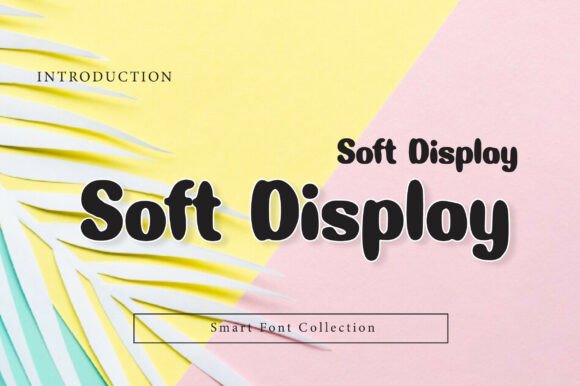
Soft Display: Elevating Brand Warmth with Friendly, Rounded Typography
In the competitive landscape of modern visual identity, typography often serves as the primary emotional bridge between a brand and its audience. While sharp serifs convey tradition and rigid sans-serifs suggest corporate efficiency, there is a growing demand for typefaces that communicate approachability without sacrificing professionalism. Soft Display answers this specific design need. It is a smooth, rounded, and friendly display font designed with soft curves and a modern playful personality. For designers, marketers, and business owners seeking to humanize their visual communications, understanding how to leverage this typeface can transform a sterile layout into an inviting experience.
The Challenge of Approachable Professionalism
A common pain point in contemporary branding is the tension between playfulness and credibility. Many brands targeting families, children, or lifestyle demographics struggle with fonts that feel either too juvenile or excessively formal. A typeface that is too cartoonish can undermine trust, while one that is too severe can alienate an audience seeking comfort and connection. This is where the strategic selection of a typeface like Soft Display becomes a practical solution rather than just an aesthetic choice.
The goal for many creative projects is to establish a warm, approachable, and cheerful vibe that still maintains excellent readability at various sizes. Designers need letterforms that are bold enough to capture attention on social media feeds or packaging shelves but gentle enough to foster a sense of safety and inclusivity. Soft Display addresses these challenges by featuring bold yet gentle letterforms. The geometry is intentionally softened, removing aggressive terminals and sharp corners that can subconsciously signal caution or rigidity to the viewer.
How Soft Display Solves Visual Communication Needs
Soft Display is engineered to balance personality with function. Its primary utility lies in its ability to soften the overall tone of a design system while maintaining structural integrity. When implementing this font, users will notice that the rounded aesthetics do not compromise legibility. This is crucial for display settings where clarity is paramount. The font’s modern playful personality acts as a visual cue, signaling to the audience that the content is accessible and user-friendly.
For brands undergoing a rebrand to appear more current and empathetic, switching to or incorporating Soft Display can serve as an immediate tonal shift. It moves the needle away from cold minimalism toward organic warmth. This is particularly effective in digital environments where screen fatigue is real; softer typographic edges can reduce cognitive load and create a more relaxing reading experience for headlines and short-form copy. By prioritizing a friendly display font, businesses can align their visual output with values of care, community, and positivity.
Practical Applications Across Industries
The versatility of Soft Display makes it suitable for a wide array of practical applications. Understanding where this typeface performs best helps maximize its impact. Below are key areas where this font excels:
- Logos and Branding: For startups, bakeries, childcare centers, and wellness brands, Soft Display provides a distinct silhouette that is memorable and ownable. The rounded forms suggest continuity and wholeness, which are powerful attributes for logo marks and wordmarks.
- Packaging Design: On physical products, especially those aimed at children or eco-conscious consumers, the tactile quality of rounded typography translates visually. Soft Display adds a premium yet accessible feel to labels, boxes, and bags, making products stand out on crowded retail shelves.
- Social Media Graphics: In the fast-scrolling environment of Instagram, TikTok, or Pinterest, bold yet gentle letterforms stop the scroll without shouting. The font’s weight ensures visibility against busy backgrounds, while its friendly nature encourages engagement and shares.
- Kids Designs and Educational Materials: Creating content for younger audiences requires a delicate balance. Soft Display offers cute typography that respects the intelligence of the child. It avoids looking condescending while remaining fun and engaging for storybooks, worksheets, and classroom decor.
- Stickers and Merchandise: The self-contained nature of display fonts makes them ideal for die-cut stickers and apparel. The smooth curves of Soft Display translate exceptionally well to vinyl cutting and embroidery, ensuring production quality matches the design intent.
Implementation Strategies for Different Users
Different stakeholders approach typography with varying objectives. Recognizing these distinctions ensures that Soft Display is used effectively across different contexts.
For Graphic Designers
Designers should treat Soft Display as a high-impact accent tool. Because it is a display font, it is optimized for headlines, pull quotes, and logos rather than body text. Pair it with a clean, neutral sans-serif or a highly legible serif for long-form content to create hierarchy and contrast. The key is to let Soft Display carry the emotional weight of the design while supporting typefaces handle the informational load. Experiment with tight tracking for a retro-modern look or generous spacing for an airy, breathable aesthetic.
For Small Business Owners
If you are managing your own marketing materials, Soft Display offers a shortcut to professional warmth. Use it consistently across your touchpoints—website headers, email newsletters, and storefront signage—to build recognition. Avoid overusing it; reserve it for your most important messages to maintain its specialness. When creating social media templates, set Soft Display as your default headline font to ensure brand consistency even when content changes rapidly.
For Educators and Content Creators
When designing for learning or entertainment, readability and mood are intertwined. Soft Display supports inclusive design by offering clear letter differentiation, which aids emerging readers. Use it for titles, section breaks, and call-out boxes to guide navigation through educational content. Its cheerful vibe can also help reduce anxiety in testing or instructional materials, creating a more supportive environment for learners.
Best Practices and Considerations
To get the most out of Soft Display, consider the following practical recommendations during implementation:
- Mind the Scale: As a display font, Soft Display shines at larger sizes. Test your designs at actual size before finalizing. What looks bold on a 27-inch monitor might lose impact on a mobile screen if scaled down too aggressively.
- Color Psychology Alignment: The rounded forms of this font pair naturally with warm color palettes, pastels, and earth tones. However, using it in stark black and white can create a striking, modernist contrast that feels both retro and futuristic.
- Whitespace Management: Rounded fonts inherently occupy space differently than squared ones. Allow extra breathing room around Soft Display headlines to prevent the layout from feeling cluttered. Negative space enhances the friendly, open character of the typeface.
- Accessibility Checks: While Soft Display has excellent readability for a display font, always verify contrast ratios against your background colors. Ensure that the decorative elements do not hinder comprehension for users with visual impairments.
Creating Cohesive Visual Identities
Ultimately, the value of Soft Display lies in its capacity to unify diverse design elements under a banner of warmth and modernity. Whether applied to a tech startup wanting to seem more human, a toy company refining its packaging, or a content creator building a personal brand, this typeface offers a reliable foundation for cheerful, engaging communication.
By focusing on the emotional resonance of typography, designers and businesses can move beyond mere decoration. Soft Display is not just a collection of glyphs; it is a strategic asset for building connections. Its smooth, rounded architecture invites interaction, reduces friction, and imbues projects with a lasting sense of optimism. When selected with intention and applied with care, it transforms standard visual assets into meaningful touchpoints that resonate deeply with target audiences.