Leaftron: A Practical Guide to Using Bold Display Typography
In the vast landscape of digital and print design, selecting the right typeface is often the difference between a project that resonates and one that fades into the background. For designers, marketers, and business owners seeking to inject immediate energy into their visual communications, Leaftron has emerged as a distinctive solution. This bold, playful display font is engineered specifically to bring personality and fun to creative projects. Unlike versatile sans-serifs meant for utility, Leaftron is a specialist tool designed for impact.
Understanding when and how to deploy such a character-driven typeface requires more than just an appreciation for its aesthetic; it demands a practical understanding of visual hierarchy, audience psychology, and legibility. This guide explores the functional applications of Leaftron, helping you determine if its chunky, cartoon-inspired letterforms are the right fit for your next headline, logo, or packaging design.
Defining the Visual Character of Leaftron
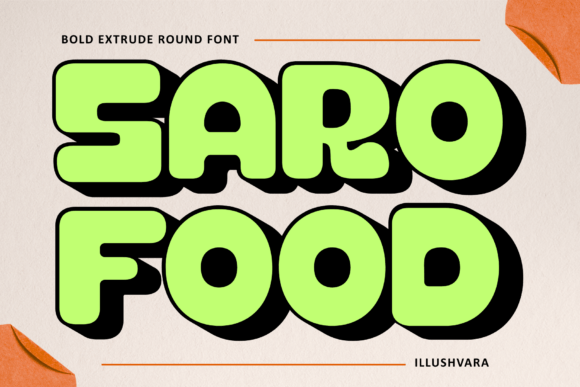
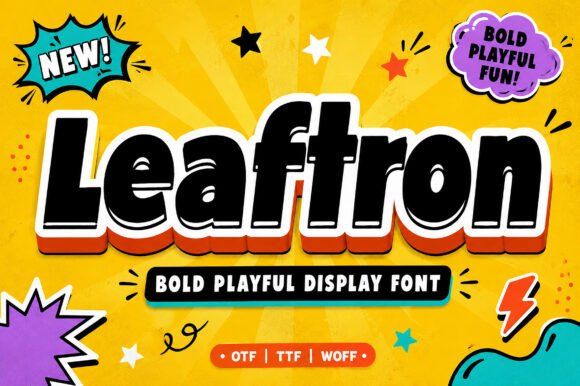
To use Leaftron effectively, one must first understand its anatomical distinctiveness. It is not a neutral vessel for text; it is an active participant in the messaging. The font is defined by thick shapes and expressive styling that evoke a sense of nostalgia and approachability. Its letterforms are intentionally chunky, avoiding sharp, aggressive angles in favor of rounded, friendly contours.
This cartoon-inspired style serves a specific psychological purpose. In design theory, rounded and heavy typefaces are frequently associated with safety, youth, and accessibility. When a viewer encounters Leaftron, the immediate subconscious association is often positive and energetic. This makes it fundamentally different from corporate serifs or minimalist geometric sans-serifs. It does not whisper; it announces. However, this strength is also its primary constraint. Because the font carries so much inherent personality, it dictates the tone of the entire composition. Designers must be comfortable letting the typography lead the visual narrative rather than treating it as a secondary element.
Ideal Applications and Use Cases
While versatility is often praised in typography, specialized fonts like Leaftron excel because they are not universally applicable. They shine brightest in specific contexts where standard typography fails to capture attention. Based on its structural characteristics, Leaftron is particularly effective in the following scenarios:
- Children’s Products and Toy Branding: The primary demographic for this aesthetic responds to high-contrast, soft-edged visuals. Leaftron mimics the tactile nature of building blocks and educational materials, making it a natural choice for packaging, book covers, and app interfaces targeting younger audiences.
- Retro and Vintage Artwork: The bold weight and stylized curves align closely with mid-century advertising and 1970s pop culture aesthetics. For poster designers creating gig posters, festival announcements, or retro-themed merchandise, this font provides instant period-appropriate authenticity without looking like a distressed novelty script.
- Social Media Graphics and Stickers: In the fast-scrolling environment of social feeds, legibility at small sizes combined with visual stopping power is paramount. Leaftron’s heavy stroke width ensures readability even when scaled down for Instagram stories or TikTok overlays, while its unique silhouette helps branded stickers stand out in digital and physical spaces.
- Event Promotions and Headlines: For fairs, carnivals, school events, or casual community gatherings, formal typography can feel alienating. Leaftron bridges the gap between professional design and communal warmth, signaling that an event is accessible and entertaining.
Navigating Limitations and Best Practices
A common pitfall when working with expressive display fonts is overuse. Because Leaftron is visually loud, it competes for cognitive load. To maintain a professional and usable design, creators should adhere to several practical guidelines.
The Hierarchy of Contrast
Leaftron should almost exclusively be reserved for headlines, logos, and short call-to-action buttons. It is not suitable for body copy, captions, or lengthy descriptions. The chunky letterforms that make it excellent for titles reduce reading speed significantly when used in paragraphs. Always pair Leaftron with a clean, highly legible sans-serif or simple serif for supporting text. This contrast not only preserves usability but actually enhances the impact of the display font by giving the eye a place to rest.
Spacing and Kerning Considerations
Bold, playful fonts often have unique spacing requirements. Depending on the specific version or licensing of Leaftron you are using, you may need to manually adjust kerning (the space between individual letters) or tracking (overall letter spacing). Tighter tracking can enhance the solid, blocky feel for logos, while slightly looser tracking may improve legibility in all-caps headlines. Never rely solely on default metrics; always optically adjust the type to ensure the "friendly" character doesn't become cluttered or illegible.
Color and Background Interaction
The thickness of Leaftron’s strokes allows for creative color treatments that thinner fonts cannot support. It handles gradients, outlines, and drop shadows well without losing its form. However, ensure sufficient contrast ratios against backgrounds. While the font is playful, accessibility should not be sacrificed. A bright yellow Leaftron on a white background may look cheerful, but it will fail WCAG accessibility standards and strain the reader's eyes. Opt for high-contrast pairings that maintain the fun energy while ensuring the message is readable for everyone.
Evaluating Suitability for Your Project
Before committing to Leaftron, conduct a brief suitability audit. Ask yourself the following questions to ensure alignment between the typeface and your project goals:
- What is the emotional goal? If the objective is trust, stability, luxury, or serious information delivery, Leaftron is likely the wrong choice. If the goal is excitement, approachability, nostalgia, or fun, proceed.
- Who is the end user? Does the audience appreciate cartoon aesthetics? While generally universally liked, certain B2B sectors or conservative demographics may perceive the style as unprofessional.
- How much text is required? If your headline exceeds five to seven words, consider whether the visual weight of Leaftron will overwhelm the layout. Shorter phrases yield better results.
- Does it align with existing brand assets? If your brand identity is built on minimalism and thin lines, introducing Leaftron may create dissonance unless it is part of a deliberate rebrand or a specific campaign sub-brand.
The Value of Personality in Modern Design
In an era dominated by algorithmic design trends and homogenized tech aesthetics, there is a growing premium on human-centric, expressive typography. Users are increasingly drawn to designs that feel handcrafted and emotionally resonant. Leaftron offers a shortcut to this feeling. It bypasses the sterile precision of modernist grids and taps into a more visceral, joyful response.
For business owners and creators, this translates to tangible value. Packaging that looks fun sells differently than packaging that looks clinical. Social media posts with personality generate higher engagement rates than generic templates. Event signage that feels welcoming increases attendance and participation. By choosing a typeface like Leaftron, you are making a strategic decision to prioritize emotional connection alongside visual clarity.
Final Thoughts on Implementation
Leaftron is more than just a collection of vector shapes; it is a tonal instrument. Like any instrument, its effectiveness depends entirely on the skill of the player and the context of the performance. When used with restraint and intention, it transforms ordinary messages into memorable experiences. When used indiscriminately, it becomes noise.
As you integrate this bold display font into your workflow, remember that its primary function is to serve the communication goal. Let its chunky letterforms and cartoon-inspired energy amplify your message, not replace it. Whether you are designing a sticker for a laptop, a title card for a YouTube series, or the packaging for a new organic snack line, Leaftron provides the visual vocabulary needed to speak directly to the sense of play that exists in every audience. Test it, pair it wisely, and let the typography do the heavy lifting of setting the mood.