Unleashing Personality in Design: A Practical Guide to Using Monster Roll
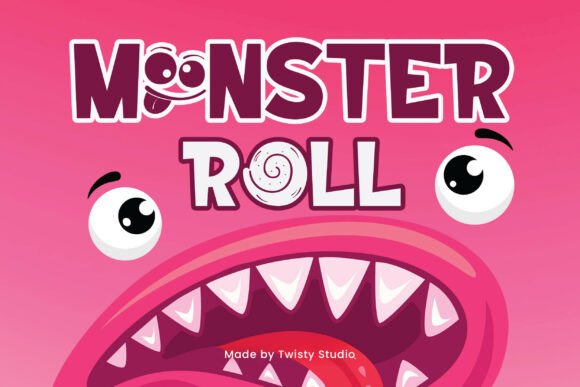
In the vast ecosystem of digital typography, designers often find themselves navigating a sea of neutrality. While clean sans-serifs and elegant serifs serve functional purposes for corporate identity and long-form reading, there remains a critical gap for typefaces that communicate pure, unadulterated character. This is where Monster Roll enters the conversation. Far from being a mere novelty, this bold and quirky display font represents a specific category of typographic expression that prioritizes emotional engagement over rigid legibility standards. Understanding how to leverage its playful shapes and goofy eyes requires a shift in design thinking, moving away from minimalist restraint toward expressive, narrative-driven visuals.
The Psychology of Playful Typography
To effectively utilize a typeface like MONSTERROLL, one must first understand why "silly" fonts work. In design psychology, rounded forms and exaggerated proportions are universally associated with safety, approachability, and youth. Sharp angles and strict geometric grids can sometimes signal authority or distance, whereas the organic, monster-sized personality of this font triggers a sense of curiosity and comfort. This is not accidental; it is a calculated use of form to lower cognitive barriers.
When an audience encounters text set in Monster Roll, they are subconsciously given permission to relax. The goofy eyes integrated into the letterforms act as anthropomorphic anchors, transforming abstract symbols into relatable characters. For educators and content creators targeting younger demographics, this transformation is vital. It bridges the gap between instruction and entertainment, making learning materials feel less like mandatory coursework and more like an interactive experience. The font does not just display words; it performs them.
Balancing Whimsy with Hierarchy
A common pitfall when working with highly stylized display fonts is the temptation to overuse them. Because Monster Roll is impossible to ignore, it demands significant negative space to breathe. Professional application involves treating this typeface as a spotlight rather than ambient lighting. It functions best in short bursts—headlines, logos, call-to-action buttons, or pull quotes—where its unique attributes can be appreciated without causing visual fatigue.
Pairing is equally critical. The inherent weight and complexity of Monster Roll require a grounding partner. High-contrast pairings work exceptionally well here. Consider combining it with a simple, humanist sans-serif or a clean monospaced font for body copy. This juxtaposition highlights the quirkiness of the display font while ensuring that essential information remains accessible. The goal is to create a visual rhythm where the wildness of the header enhances, rather than competes with, the clarity of the supporting text.
Sector-Specific Applications and Strategies
The versatility of a character-driven font extends beyond children’s media. Various industries can harness this aesthetic to differentiate their brand voice in saturated markets. Below are practical implementations across different sectors.
- Toy and Game Branding: This is the most natural habitat for Monster Roll. Packaging design benefits immensely from the font's tactile quality. On a shelf crowded with glossy, hyper-realistic graphics, the hand-drawn aesthetic suggests creativity and imagination. For game UI, using this font for achievement pop-ups or level titles reinforces the reward loop through positive visual association.
- Educational Resources: Worksheets, flashcards, and classroom signage often suffer from sterile formatting. Integrating a font with built-in personality aids in memory retention through distinctiveness. When letters have faces, phonics and vocabulary become memorable entities rather than abstract data points.
- Creative Agencies and Portfolios: Designers seeking to showcase a non-traditional approach can use Monster Roll to signal creative confidence. It acts as a filter, attracting clients who value boldness and repelling those seeking conservative corporate aesthetics. Used sparingly in portfolio headers, it demonstrates mastery of tone.
- Food and Beverage Marketing: Specifically for products targeting families or promoting indulgence (like bakeries or candy brands), the "monster-sized" aspect translates visually to abundance and fun. Menu boards featuring daily specials in this style feel handcrafted and welcoming.
Navigating Accessibility and Legibility
While Monster Roll is designed for impact, responsible design mandates attention to accessibility. Display fonts with decorative elements can pose challenges for readers with dyslexia or low vision. Therefore, it is imperative to restrict this typeface to non-critical informational layers. Never use it for navigation menus, legal disclaimers, or lengthy instructional text.
Furthermore, color contrast becomes even more important when letterforms contain internal details like eyes. If the font color is too similar to the background, these details turn into visual noise, reducing legibility. Ensure high contrast ratios are maintained, and consider testing designs with grayscale filters to verify that the character shapes remain distinct even without color cues. When used correctly, the font adds flavor without compromising the user experience for those relying on assistive technologies.
Technical Considerations for Digital and Print
Implementing a quirky display font involves technical foresight. Unlike system fonts, Monster Roll may not be universally available, requiring proper web font loading strategies or print file preparation.
Web Performance and FOUT Prevention
For digital projects, the unique geometry of Monster Roll means that fallback fonts will likely look drastically different during load times. This Flash of Unstyled Text (FOUT) can cause layout shifts that disrupt the user experience. To mitigate this, developers should utilize font-display: optional or carefully tuned swap periods. Additionally, creating a custom fallback stack that mimics the x-height and width of Monster Roll can smooth the transition. Since this font is bold, selecting a heavy-weight system font as a fallback prevents the page from appearing jarringly light before the custom asset loads.
Print Production Nuances
In physical media, the intricate details of goofy eyes and playful shapes require adequate resolution. At very small sizes, these details may fill in or appear muddy, especially on uncoated paper stocks. Designers should establish a minimum point size threshold below which Monster Roll is not used. Testing proofs on the intended paper stock is essential to ensure the ink spread does not obliterate the character-defining features. Conversely, at large scales such as billboards or wall murals, vector integrity is paramount to prevent pixelation that could make the playful curves look jagged and unintentional.
The Role of Tone in Modern Visual Communication
We are currently witnessing a shift in visual culture away from the ultra-minimalism that dominated the previous decade. Audiences are increasingly seeking authenticity and warmth in digital spaces. Fonts like Monster Roll are symptomatic of this broader trend toward "maximalist empathy." They represent a rejection of the idea that professionalism requires sterility.
For business owners and marketers, adopting such a typeface is a strategic declaration of brand values. It signals that the entity behind the message understands joy, humor, and human connection. However, this signal must be authentic. Using a quirky font for a serious financial service would create cognitive dissonance, eroding trust. But for a pediatric dentist, a summer camp, or an indie game studio, it aligns perfectly with audience expectations.
Ultimately, the effectiveness of Monster Roll lies in its ability to humanize design. In an era of AI-generated content and automated layouts, typography that feels handcrafted and intentionally silly stands out as distinctly human. It reminds us that behind every screen and printed page is a creator trying to connect with another person. By understanding the psychological underpinnings, technical requirements, and appropriate contexts for this bold display font, designers can move beyond mere decoration to create meaningful, memorable experiences that truly let creativity roar.
Future-Proofing Your Typographic Choices
Trends in display typography are cyclical. While Monster Roll is currently relevant due to the cultural desire for playfulness, designers should always consider longevity. One way to future-proof projects using such a distinctive font is to build modular design systems where the display typeface is easily swappable without breaking the underlying grid or color system. Treat Monster Roll as a seasonal ingredient or a campaign-specific tool rather than a permanent structural element, unless the brand identity is entirely predicated on this specific aesthetic. This flexibility ensures that your design remains adaptable to shifting cultural moods while retaining the core functionality required for effective communication.