Evaluating Father Punker Font for Display Typography
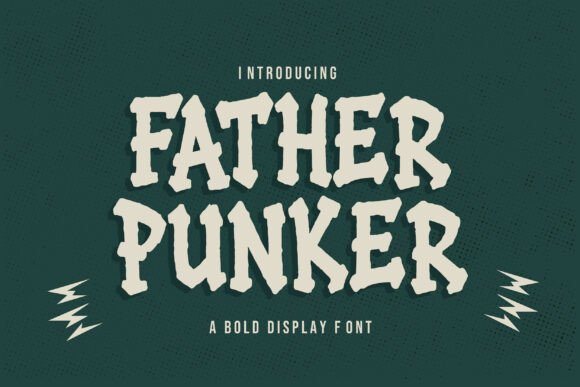
Father Punker is a specialized display typeface designed to emulate the visual language of punk culture and underground music scenes. Characterized by distressed textures, irregular strokes, and a handcrafted aesthetic, it serves as a typographic representation of rebellion and raw energy. For designers and art directors evaluating this font, understanding its specific utility is essential. It is not a versatile workhorse typeface but rather a targeted tool intended to evoke specific cultural associations related to alternative music, vintage posters, garage band art, street typography, and tattoo design. This evaluation explores the practical applications, limitations, and decision-making factors associated with integrating Father Punker into visual projects.
Defining the Visual Characteristics
To determine if Father Punker aligns with project requirements, one must first analyze its construction. The typeface rejects digital perfection in favor of analog imperfection. Each glyph exhibits signs of wear, mimicking the degradation found in photocopied zines, screen-printed concert flyers, and hand-painted signage. The bold countenance ensures visibility at larger sizes, while the distressed details provide texture that flat vector fonts often lack.
The design philosophy centers on authenticity within the punk genre. Unlike grunge fonts that apply a uniform noise filter over standard letterforms, Father Punker integrates distress directly into the stroke structure. This results in a more organic appearance that mirrors the DIY ethos of the subculture. When evaluating this font, observers should note that the irregularities are consistent enough to maintain legibility as a display face, yet chaotic enough to prevent the text from appearing sterile or corporate.
Primary Use Cases and Strategic Fit
Father Punker performs optimally in contexts where the visual tone must immediately communicate non-conformity, nostalgia for underground movements, or high-energy creativity. Designers considering this typeface should assess whether their project falls into categories where polished typography would be counterproductive.
- Music Industry Assets: Album covers, merchandise, and promotional materials for punk, hardcore, metal, and alternative rock genres benefit from the font’s inherent association with these scenes.
- Event Promotion: Concert posters, festival lineups, and club flyers utilize the bold weight to capture attention while the texture suggests an authentic, grassroots event rather than a commercial production.
- Streetwear and Apparel: T-shirt graphics and skate culture branding often require typography that feels lived-in and rebellious. Father Punker provides a ready-made aesthetic that aligns with these fashion subcultures.
- Editorial and Zine Design: Publications focusing on counter-culture, independent art, or music journalism can use this font for headlines and pull quotes to reinforce editorial voice through visual form.
- Tattoo and Body Art Reference: Artists seeking digital mockups or flash sheet designs that replicate traditional hand-lettering styles will find the font’s stroke variation useful for visualization.
Tradeoffs and Practical Limitations
While Father Punker excels in niche applications, its distinctive features introduce significant tradeoffs that must be weighed during the selection process. Recognizing these limitations prevents misuse and ensures accessible, effective design outcomes.
Legibility Constraints
The distressed nature of the letterforms inherently reduces readability. At small sizes, the textured edges blur, and the internal counters may fill in, making character recognition difficult. Consequently, Father Punker is strictly a display font. It is unsuitable for body copy, captions, interface text, or any application requiring sustained reading. Projects necessitating extensive textual content will require pairing this font with a highly legible sans-serif or monospaced typeface to balance aesthetic impact with functional communication.
Tonal Specificity
This typeface carries a heavy semantic load. Using Father Punker signals a specific cultural alignment. Applying it to corporate communications, luxury brands, healthcare, or formal institutions creates cognitive dissonance that can undermine credibility. Even within creative industries, it may be too aggressive for projects aiming for a minimalist, futuristic, or refined aesthetic. Evaluators must ensure the font’s rebellious spirit supports rather than distracts from the core message.
Technical Considerations
Distressed fonts often contain complex vector paths due to the jagged edges and texture details. This can result in larger file sizes and slower rendering times compared to clean geometric typefaces. In web environments, this may impact performance metrics. Additionally, when scaling the font to very large formats like billboards or vehicle wraps, the distress patterns may appear pixelated or repetitive unless the source files are sufficiently high-resolution. Print designers should verify output quality at intended scales before finalizing production files.
Comparative Evaluation and Alternatives
When selecting a display font for alternative or edgy projects, Father Punker is one option among many. A comparative assessment helps clarify its unique position in the typographic landscape.
If the goal is aggression without the vintage texture, cleaner brutalist or industrial typefaces may offer better legibility while maintaining intensity. Conversely, if the objective is historical accuracy regarding specific punk eras, sourcing original hand-lettering or using period-accurate revival fonts might yield more authentic results than a contemporary interpretation. For projects requiring a grunge aesthetic that is less culturally coded, generic distressed sans-serifs provide texture without the strong punk association, offering greater versatility across different themes.
Father Punker distinguishes itself through its commitment to the handcrafted, DIY aesthetic specifically tied to punk heritage. It occupies a middle ground between polished digital grunge and authentic archival reproduction. Designers prioritizing cultural resonance and tactile warmth over neutrality will find it superior to generic alternatives, while those needing broader applicability should look elsewhere.
Decision-Making Framework
Selecting Father Punker should be a deliberate choice based on project parameters rather than stylistic preference alone. The following criteria assist in determining alignment:
- Audience Alignment: Does the target demographic associate this visual style with authenticity and value, or does it risk appearing as a caricature? Understanding the audience’s relationship with punk aesthetics is paramount.
- Hierarchy Requirements: Can the design system function effectively with only one display size for this font? If multiple weights or optical sizes are needed, Father Punker’s limited range may be insufficient.
- Pairing Strategy: Has a complementary typeface been identified that provides necessary contrast? Successful implementation depends on balancing Father Punker’s chaos with structured supporting typography.
- Medium Suitability: Will the distress details reproduce clearly in the intended medium? Digital screens, low-quality newsprint, and high-gloss paper all render texture differently. Testing in context is mandatory.
- Longevity vs. Trend: Is the project timeless or ephemeral? While punk aesthetics have endured, specific font interpretations can date quickly. Assess whether this particular rendering suits the project’s intended lifespan.
Final Assessment
Father Punker serves a distinct purpose in the typographic toolkit. It offers designers a direct conduit to the visual energy of underground culture, providing immediate atmospheric context through its distressed, bold forms. Its value lies in its specificity; it communicates a mood that would otherwise require extensive custom illustration or photo manipulation.
However, this specificity demands responsible application. The font succeeds when treated as a focal point rather than a default setting. By acknowledging its legibility constraints, respecting its cultural connotations, and pairing it thoughtfully with functional typefaces, designers can leverage Father Punker to create impactful, authentic display typography. Ultimately, the decision to use this typeface should stem from a clear understanding of both its expressive capabilities and its functional boundaries, ensuring that the rebellious spirit it embodies enhances rather than compromises the communicative goals of the project.