Evaluating French Macchiola for Editorial and Luxury Design
Selecting the right typeface is one of the most critical decisions in visual communication, particularly when the goal is to convey heritage, sophistication, or high fashion. French Macchiola has emerged as a notable option for designers seeking a vintage-inspired display serif that bridges the gap between historical European aesthetics and contemporary branding needs. This evaluation explores the functional characteristics, appropriate use cases, and practical considerations of French Macchiola to help design professionals determine if it aligns with their specific project requirements.
Defining the Typographic Character
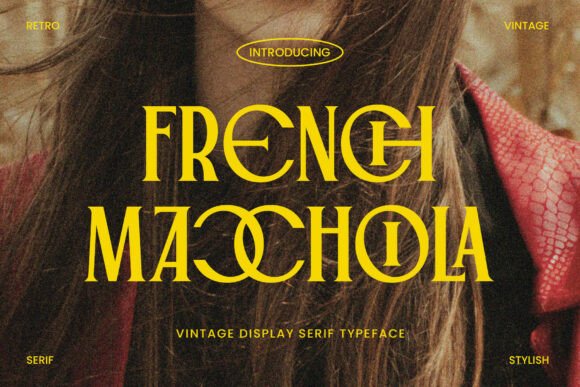
French Macchiola is classified as a display serif typeface with distinct editorial roots. Its design language is heavily influenced by mid-20th-century European magazines and classic fashion typography. Unlike standard transitional serifs designed for long-form reading, this typeface prioritizes visual impact and stylistic expression. The letterforms exhibit bold contrast between thick and thin strokes, a hallmark of Didone and modern serif classifications, yet softened with retro proportions that prevent it from appearing overly sterile or rigid.
A defining feature of French Macchiola is its inclusion of distinctive ligatures and alternate characters. These details are not merely decorative; they serve to create a custom, bespoke appearance without requiring manual vector manipulation. The typeface carries a strong French editorial character, evoking a sense of romance and authority simultaneously. For designers evaluating this font, it is essential to understand that it functions primarily as a headline and branding tool rather than a utility text face.
Strategic Applications and Ideal Use Cases
Understanding where French Macchiola performs best is crucial for maximizing its value. Based on its anatomical features and aesthetic tone, it is particularly effective in the following contexts:
- Luxury Branding and Identity: The high stroke contrast and elegant proportions signal premium quality. It is well-suited for cosmetics, perfume, jewelry, and high-end hospitality brands that require a visual voice balancing tradition with modern refinement.
- Fashion Editorials and Campaigns: Drawing direct inspiration from vintage fashion publications, the typeface integrates seamlessly into magazine layouts, lookbooks, and advertising campaigns where typographic hierarchy and mood are paramount.
- Wedding and Event Stationery: The romantic undertones and expressive ligatures make it a strong candidate for formal invitations, save-the-dates, and event signage, offering an alternative to traditional scripts while maintaining formality.
- Statement Headlines: In digital or print layouts, French Macchiola commands attention at large sizes. It works effectively as a standalone element or paired with minimalist sans-serifs to create dynamic tension.
Benefits and Functional Advantages
When compared to generic serif fonts, French Macchiola offers several specific advantages for targeted projects. The primary benefit is its immediate establishment of tone. The typeface does significant heavy lifting in communicating "vintage luxury" without relying on additional graphic textures or filters. This efficiency can streamline the design process, allowing the typography itself to serve as a central visual anchor.
Furthermore, the built-in stylistic alternates provide flexibility within a single font file. Designers can adjust the personality of a headline from strictly formal to more fluid and organic simply by toggling OpenType features. This versatility reduces the need to license multiple complementary display fonts for a single brand identity system. The refined modern touch also ensures that designs do not appear as pastiche or costume; the typeface feels rooted in history but executed with current production standards.
Tradeoffs and Practical Considerations
No typeface is universally applicable, and French Macchiola presents specific tradeoffs that must be weighed during the selection process. The most significant limitation is legibility at small sizes. Due to its high contrast and delicate hairlines, the font loses integrity when scaled down for body copy, captions, or mobile interfaces. It is strictly a display typeface; attempting to use it for paragraphs will result in poor readability and visual vibration.
Another consideration is the specificity of its aesthetic. While the French editorial character is a strength for luxury and fashion, it may feel incongruent for technology, corporate finance, healthcare, or utilitarian brands. The typeface carries inherent emotional baggage associated with romance and nostalgia. If a project requires neutrality, objectivity, or futuristic innovation, French Macchiola may actively work against the communication goals.
Designers should also evaluate the spacing and kerning requirements. Display serifs with such pronounced contrast often require careful optical adjustment when used in all-caps settings or tight lockups. While the ligatures are helpful, they may not solve every pairing issue, necessitating manual refinement to maintain professional polish.
Comparing Alternatives and Decision Criteria
To make an informed decision, it is helpful to compare French Macchiola against other categories of display serifs. If the project requires vintage charm but with greater readability or a less formal tone, a low-contrast slab serif or a rounded retro display might be more appropriate. Conversely, if the goal is ultra-modern luxury without the nostalgic weight, a geometric high-contrast serif like those found in the Didot or Bodoni revivals may offer a sharper, more clinical elegance.
When evaluating whether to proceed with French Macchiola, consider the following decision matrix:
- Audience Alignment: Does the target demographic associate high-contrast vintage serifs with quality and desirability? Younger demographics may read it as trendy, while older demographics may view it as classic.
- Medium Viability: Will the typeface be reproduced at sizes where its fine details remain crisp? Print generally favors this style over low-resolution screens.
- Brand Longevity: Is the vintage trend central to the brand’s permanent identity, or is it a seasonal campaign theme? Trend-dependent typefaces risk dating a brand quickly if not anchored in genuine heritage.
- Licensing Flexibility: Ensure the license covers all intended media, especially if moving between print editorials and digital advertising, as display fonts sometimes have restricted web licensing tiers.
Final Assessment for Design Professionals
French Macchiola represents a specialized tool within the typographic arsenal. It excels in environments where emotional resonance, historical reference, and visual drama are prioritized over neutral information delivery. For luxury branding, fashion editorials, and formal event design, it offers a sophisticated voice that balances retro charm with modern execution.
However, its utility is bounded by its display-only nature and specific stylistic niche. Designers should select this typeface when the brief explicitly calls for French editorial elegance and when technical constraints support its high-contrast anatomy. By treating French Macchiola as a strategic accent rather than a universal solution, creatives can leverage its distinctive character to build memorable, authoritative visual identities that resonate with discerning audiences. Ultimately, the choice should be driven by alignment with communication objectives rather than aesthetic preference alone, ensuring the typography serves the broader design strategy effectively.