Dacomment: Effortless Personality for Modern Design
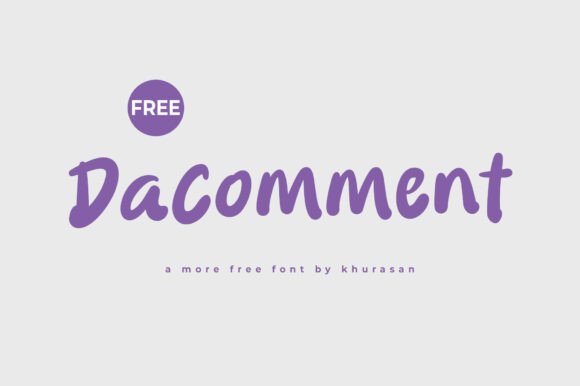
There is a distinct difference between typography that looks manufactured and lettering that feels lived-in. In an era where digital perfection often dominates visual culture, audiences are increasingly drawn to designs that offer a sense of human connection and authenticity. Dacomment captures this specific aesthetic sweet spot. It is a casual marker-style font that manages to feel both friendly and genuine without sacrificing the structural integrity required for professional work. Unlike rigid geometric typefaces or overly ornate scripts, this typeface features soft, rounded strokes and a subtle organic bounce that mimics the natural flow of hand-drawn lettering.
The appeal lies in its restraint. Many handwritten fonts struggle with legibility when scaled down or used in longer formats, but Dacomment maintains excellent readability through its medium weight and clean terminals. It strikes a balance between the raw energy of a sketchbook and the polished reliability of a premium font. For designers and creators looking to inject warmth into their projects without appearing unprofessional, this typeface offers a versatile solution that bridges the gap between playful expression and functional communication.
Visual Characteristics and Authentic Appeal
Understanding the anatomy of Dacomment helps explain why it performs so well across various media. The letterforms avoid the uniformity typical of standard sans serif fonts, instead opting for slight variations in stroke width and baseline alignment. This "organic bounce" prevents the text from looking static or computer-generated. When you set a headline in Dacomment, it retains the imperfections that signal human authorship, yet the underlying grid ensures that the composition remains balanced.
This visual personality directly influences brand perception. In modern typography, the choice of typeface acts as a non-verbal cue to the audience. A sharp, high-contrast serif font might communicate luxury or tradition, while Dacomment signals approachability, creativity, and transparency. It tells the viewer that there is a person behind the brand. This is particularly valuable for small business owners and content creators who rely on building personal relationships with their audience. The font’s relaxed vibe reduces cognitive friction, making invitations, announcements, and educational content feel less like corporate mandates and more like personal notes.
Strategic Applications Across Media
Versatility is the hallmark of any reliable creative font, and Dacomment proves its worth in diverse practical scenarios. Its strength lies in its ability to adapt to different contexts while maintaining its core identity. Here is where this typeface consistently delivers value:
- Quote Graphics and Social Media: Inspirational quotes and lifestyle tips perform better when they feel personal. Dacomment adds a layer of sincerity to Instagram carousels and Pinterest pins that standard system fonts cannot replicate.
- Children’s Book Titles and Editorial Design: The rounded, soft terminals are inherently welcoming to younger readers and parents. It works beautifully for chapter headings, cover art, and interactive learning materials where intimidation must be minimized.
- DIY and Craft Branding: For makers selling on Etsy or running craft blogs, the font aligns perfectly with the handmade ethos. It reinforces the narrative of artisanal quality in packaging design and product labels.
- Lifestyle Blog Headers: Web design benefits from display typefaces that break up dense body copy. Using Dacomment for H1 and H2 tags creates a visual rhythm that keeps readers engaged through long-form articles.
- Greeting Cards and Stationery: Whether for commercial print lines or personal projects, the marker style evokes the nostalgia of handwritten correspondence while ensuring the message is instantly readable.
While it excels as a display font, it is important to recognize its limits. Dacomment is not intended for setting paragraphs of body text. Its character and spacing are optimized for impact at larger sizes. Pairing it correctly with other typefaces is essential for maintaining hierarchy and professionalism.
Mastering Font Pairings and Visual Hierarchy
A common mistake when using expressive typefaces is allowing them to compete with other elements. Because Dacomment has such a strong voice, it requires a supportive partner. Effective font pairing relies on contrast. Since Dacomment possesses organic curves and variable baselines, it pairs best with structured, neutral companions.
For logo design and brand identity systems, consider anchoring Dacomment with a clean geometric sans serif or a traditional transitional serif. The stability of the secondary font grounds the playfulness of the marker style, creating a dynamic tension that is visually interesting yet easy to navigate. For example, a boutique coffee roaster might use Dacomment for the brand name to suggest artisanal care, while utilizing a simple sans serif for the address, hours, and flavor notes to ensure rapid information processing.
In web design and digital layouts, this hierarchy becomes even more critical. Use Dacomment to guide the user’s eye to key conversion points or emotional hooks, but revert to highly legible web-safe fonts for navigation menus, footers, and article bodies. This strategic use of typography ensures that the decorative elements enhance the user experience rather than hindering accessibility. Always test your pairings at multiple screen sizes; what looks harmonious on a desktop monitor may become cluttered on a mobile device.
Practical Considerations for Professional Use
Before integrating Dacomment into a commercial project, thorough evaluation is necessary. While the font is designed for legibility, real-world testing is the only way to confirm fit. Print out samples at actual size if designing for physical media, or view mockups on target devices for digital work. Pay attention to kerning and tracking; because the letterforms have an organic bounce, manual adjustments may be needed to prevent awkward gaps or collisions in specific word combinations.
Licensing is another non-negotiable aspect of using commercial fonts. Always verify the specific license terms associated with your download. Desktop licenses typically cover print and static digital images, but webfont licenses, app embedding, and merchandise production often require separate agreements. Respecting these terms protects your business from legal issues and supports the type designers who create these valuable design assets.
Finally, consider the longevity of the design. Trendy script fonts can sometimes date a project quickly. Dacomment’s reliance on classic marker aesthetics rather than fleeting decorative trends gives it a timeless quality within the casual genre. It feels current because of its execution, not because of a gimmick. By focusing on clarity, warmth, and authentic expression, this typeface serves as a reliable tool for creators who want their work to resonate on a human level. Whether you are refining a brand identity or crafting a single social media post, Dacomment provides the stylistic nuance needed to turn generic content into meaningful communication.