Brojack: Evaluating a Bold Retro Serif for Modern Branding
In the current landscape of graphic design, the resurgence of vintage aesthetics has moved beyond simple nostalgia into a sophisticated tool for brand differentiation. Brojack emerges in this space as a bold retro serif typeface that attempts to bridge the gap between mid-century typographic traditions and contemporary digital requirements. For designers, marketers, and business owners evaluating type assets, the primary question is rarely just about visual appeal; it is about functional versatility and long-term utility. Brojack presents itself as a solution for projects requiring immediate visual impact without sacrificing structural integrity, but understanding its specific mechanical strengths is essential for determining if it belongs in your creative toolkit.
Typographic Anatomy and Visual Character
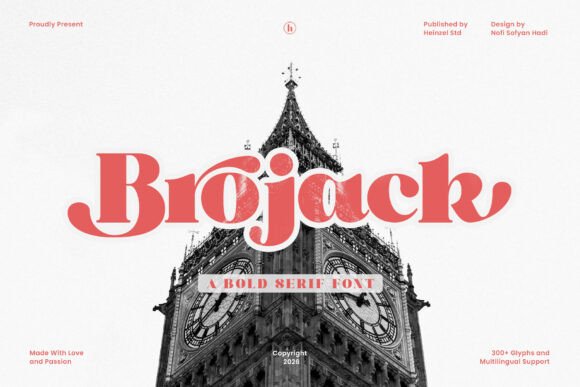
Brojack is defined by high-contrast strokes and confident serifs that recall the advertising typography of the 1960s and 1970s. However, unlike authentic period revivals that often retain the technical limitations of metal typesetting, this font exhibits a modernized geometry. The curves are mathematically smooth, and the terminals have been refined for clarity at various sizes. This distinction matters significantly for professional work. While the aesthetic is undeniably retro, the construction is digital-native.
The weight distribution in Brojack leans heavily toward the bold. It is not designed as a text face for long-form reading but rather as a display workhorse. The thick strokes provide substantial ink coverage, creating a dense texture that commands attention on posters, packaging, and hero sections of websites. The serifs are bracketed and sturdy, preventing the letterforms from appearing fragile when scaled up. This robustness allows the typeface to maintain legibility even when subjected to aggressive color contrasts or textured backgrounds, a common requirement in editorial and fashion design.
Strengths in Display Applications
The primary value proposition of Brojack lies in its ability to establish hierarchy instantly. In layout design, achieving clear visual order is often a challenge when using decorative fonts. Brojack solves this through sheer optical weight. When paired with a neutral sans-serif or a clean geometric mono, it creates an immediate focal point. This makes it particularly effective for:
- Brand Identity Systems: Logotypes and wordmarks benefit from the font’s distinct silhouette, which remains recognizable even at small favicon sizes due to its bold proportions.
- Packaging Design: On retail shelves, the high contrast and strong vertical stress help products stand out against competitors using thinner, more delicate typography.
- Editorial Headlines: Magazine covers and blog headers utilize the font's nostalgic tone to evoke emotion while maintaining modern readability standards.
- Social Media Assets: The heavy stroke width translates well to mobile screens where fine details often get lost in compression or small viewports.
Practical Usability and Workflow Integration
Aesthetics alone do not justify the adoption of a new typeface; usability is equally critical. From a production standpoint, Brojack demonstrates competence in kerning and spacing. Many retro-inspired fonts suffer from poor default metrics, requiring designers to manually adjust tracking for every headline. Brojack appears to have been spaced with display use in mind, offering consistent rhythm out of the box. This efficiency reduces production time for freelancers and agencies working under tight deadlines.
However, users should be aware of its limitations regarding flexibility. Because Brojack is optimized for bold display settings, it may lack the lighter weights necessary for subheads or body copy. This necessitates a pairing strategy. Relying solely on this typeface for an entire project can lead to visual fatigue and accessibility issues. It functions best as the "voice" of the design—the element that speaks loudly—while other typefaces handle the conversation. Professionals should test the font extensively in their specific medium before committing. What looks powerful on a desktop monitor may require adjustment for large-format print or responsive web environments.
Technical Considerations for Digital and Print
For web designers, the bold nature of Brojack requires careful implementation. Heavy serifs can sometimes render poorly on low-resolution screens if hinting is inadequate. Testing across multiple browsers and operating systems is recommended to ensure the serifs do not pixelate or blur. In print, the font’s density allows for excellent reproduction on uncoated papers, where ink spread can actually enhance the vintage feel. Conversely, on glossy stock, the sharp edges remain crisp, lending a more premium, polished appearance. Understanding these substrate interactions helps in maximizing the font’s effectiveness across different deliverables.
Audience Fit and Strategic Application
Determining whether Brojack aligns with a specific project requires an honest assessment of brand positioning. This typeface carries inherent connotations of warmth, heritage, craftsmanship, and boldness. It is exceptionally well-suited for industries that leverage these associations.
- Fashion and Apparel: Particularly for brands focusing on streetwear, denim, or sustainable clothing where a connection to past eras signals authenticity.
- Food and Beverage: Craft breweries, artisanal coffee roasters, and farm-to-table restaurants utilize this style to communicate quality and tradition.
- Creative Agencies and Studios: Using Brojack in self-promotion signals a respect for design history combined with current trends, appealing to clients looking for established yet fresh aesthetics.
- Music and Entertainment: Event posters, album art, and festival branding benefit from the font’s energetic and rhythmic qualities.
Conversely, Brojack may be ill-advised for sectors requiring clinical precision, futuristic minimalism, or corporate neutrality. Financial institutions, medical technology firms, or luxury brands aiming for ultra-modern sophistication might find the retro associations distracting or tonally inconsistent. The font is a stylistic choice that communicates a specific message; ensuring that message aligns with business goals is the responsibility of the designer.
Evaluating Long-Term Value and Licensing
Trends in typography are cyclical, and the current appetite for bold retro serifs is significant. A practical concern for professionals is the longevity of such assets. Will Brojack look dated in three years? While the specific trend may evolve, the underlying quality of the drawing suggests resilience. Fonts that are merely trendy often have structural flaws that make them tiresome quickly. Brojack’s adherence to solid typographic principles gives it a better chance of aging gracefully as a reliable display option rather than a fleeting fad.
When considering acquisition, review the licensing terms carefully. For entrepreneurs and small business owners, ensuring the license covers intended commercial uses—including web embedding, app usage, or merchandise—is vital. A lower upfront cost can sometimes lead to compliance issues later if the scope of use expands. Investing in a comprehensive license for a versatile workhorse like Brojack often yields better ROI than purchasing multiple single-use novelty fonts. Evaluate the character set completeness as well; support for extended languages, ligatures, and alternate glyphs increases the font's utility across international campaigns and complex layouts.
Making the Final Decision
Brojack represents a competent intersection of style and substance within the retro serif category. Its strengths are clear: bold presence, modernized construction, and strong performance in display contexts. Its limitations are equally defined: specialized use case and the need for thoughtful pairing. For the target audience of creators, marketers, and business owners, the decision to adopt Brojack should stem from a specific need for authoritative, nostalgic visual communication. It is not a universal solution, but for the right project, it offers a level of polish and character that generic alternatives cannot match. By approaching this typeface as a strategic asset rather than mere decoration, professionals can leverage its distinctive qualities to build memorable, effective visual identities that resonate with contemporary audiences while honoring typographic tradition.