Step Back in Time: Elevating Modern Design with Funky Whimsy Typeface
There is a distinct rhythm to 1970s graphic design that continues to captivate audiences decades later. It was an era defined by unapologetic color, fluid shapes, and typography that felt more like illustration than mere text. For contemporary designers seeking to capture that specific golden era energy without resorting to tired clichés, Funky Whimsy offers a sophisticated yet playful solution. Originally designed by Alit Design Studio, this display font serves as a bridge between vintage nostalgia and modern digital workflows, providing a typographic playground that transforms standard layouts into vibrant visual experiences.
Funky Whimsy is not simply a retro revival; it is a reimagining of groovy aesthetics for today’s branding landscape. With its thick, bubbly curves and bold presence, it demands attention while maintaining a cheerful accessibility. Whether you are crafting merchandise, designing album art, or building a brand identity that needs to stand out in a saturated market, understanding the functional depth of this typeface is essential for maximizing its potential.
The Anatomy of Groovy: Understanding the Visual Language
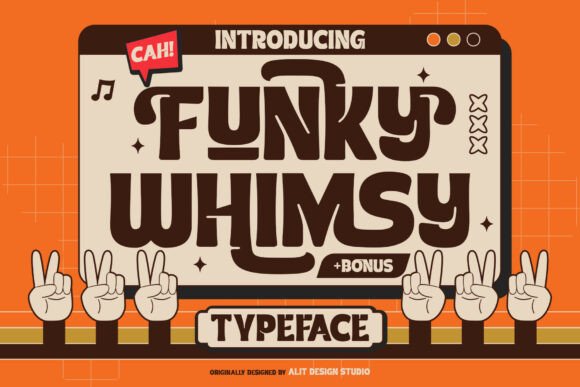
At first glance, Funky Whimsy reads as purely decorative, but a closer inspection reveals a carefully constructed letterform system designed for legibility at display sizes. The "bubbly" nature of the font is achieved through consistent stroke weights and rounded terminals that soften the overall composition. This softness is crucial in retro design because it evokes a sense of warmth and approachability often missing in sharper, geometric revivals.
The x-height and cap-height relationships in Funky Whimsy have been tuned to create a dense, impactful word shape. This density allows the typeface to function almost as a logo mark on its own. When set tightly, the letters interact to form cohesive blocks of color and texture, making it ideal for headlines where space is premium but impact cannot be compromised. Unlike some novelty fonts that sacrifice readability for style, Funky Whimsy maintains clear character distinction, ensuring that your message remains intelligible even when styled heavily.
Beyond the Alphabet: Leveraging OpenType Features
The true power of Funky Whimsy lies beneath the surface. Many designers make the mistake of treating retro display fonts as static assets, typing out their text and moving on. However, this typeface is packed with OpenType features that turn it into a dynamic design tool. Alit Design Studio has included stylistic alternates spanning from Stylistic Set 01 through Set 10, offering a massive range of variation within a single font file.
These alternates are not random variations; they are curated options that allow for custom hand-lettered effects without requiring advanced illustration skills. By mixing standard characters with these alternates, designers can break the mechanical repetition of digital type. You might swap a standard 'A' for a swashed version in one instance, use a condensed alternate in another, and employ a decorative cap elsewhere. This level of control mimics the organic imperfections of 70s sign painting and poster art, adding authenticity to digital compositions.
- Stylistic Sets 01-10: Provides extensive glyph variations to prevent visual monotony in longer headlines.
- Custom Ligatures: Automatically connects specific letter pairs to improve flow and reduce awkward spacing.
- Dingbat Ligatures: Integrates retro icons, peace signs, and sparkles directly into the text stream for seamless layout integration.
- Contextual Alternates: Adjusts character shapes based on surrounding letters to maintain visual harmony.
Practical Applications in Merchandise and Branding
Funky Whimsy excels in environments where tactile engagement matters. In the realm of merchandise and apparel, typography must translate well across various production methods. The bold, solid fills of this typeface make it exceptionally suitable for screen printing on T-shirts and tote bags. Thin lines often get lost or break during the printing process, but the robust curves of Funky Whimsy hold ink beautifully, resulting in crisp, vibrant products.
For enamel pin manufacturing, the font’s closed counters and substantial weight are practical necessities. Complex, thin-serif retro fonts often require expensive modifications to become pin-ready. Funky Whimsy, conversely, is nearly production-ready out of the box. Its shapes define clear metal lines and enamel pools, reducing the need for extensive vector cleanup before sending files to manufacturers.
In branding and logo design, the typeface offers instant personality. It signals creativity, heritage, and fun. Brands in the food and beverage industry, particularly those focusing on craft beer, artisanal coffee, or nostalgic snacks, find immediate synergy here. The font carries connotations of quality and tradition without feeling stuffy. When paired with the included dingbat ligatures, logos can incorporate symbolic elements—like sparkles or floral motifs—that feel intrinsic to the wordmark rather than tacked on as afterthoughts.
Integrating Retro Type into Modern Workflows
Adopting a distinctly retro typeface like Funky Whimsy requires thoughtful pairing to avoid creating a costume-party aesthetic. The key to successful implementation is contrast. Because Funky Whimsy is so expressive, it should generally serve as the primary focal point. Pairing it with a clean, neutral sans-serif or a structured monospace font grounds the design and prevents visual chaos.
Consider the hierarchy of your layout. Use Funky Whimsy for the hero statement—the three or four words that must grab attention instantly. Relegate supporting information to simpler typefaces. This approach respects the viewer's cognitive load while still delivering the desired emotional punch. Additionally, color selection plays a pivotal role. While the font looks stunning in classic 70s palettes of mustard, burnt orange, and avocado, it also adapts surprisingly well to contemporary neon gradients or muted pastels, proving its versatility beyond strict period accuracy.
Technical Considerations for Digital and Print
When working with Funky Whimsy in digital environments, file size and rendering are valid considerations. Display fonts with extensive OpenType features can sometimes result in larger file sizes. For web use, it is advisable to subset the font if possible, including only the necessary glyphs and stylistic sets required for the specific project. This ensures fast load times without sacrificing the typographic richness that makes the font special.
In print workflows, pay close attention to tracking and kerning. Retro display fonts often benefit from tighter tracking than standard body text. Experiment with negative tracking to increase the interlocking effect of the bubbly curves, but always proofread carefully to ensure letters do not collide unintentionally. The included ligatures handle many common collisions automatically, but manual adjustment may still be necessary for unique word combinations.
Furthermore, consider the scale of application. Funky Whimsy is designed for display purposes, meaning it shines at larger point sizes. Using it at small sizes for body copy or fine print will diminish its charm and potentially harm legibility. Reserve this typeface for moments where it can breathe and perform. Treat it as the lead singer of your typographic band, not the backup vocalist.
Why Authenticity Matters in Retro Design
The resurgence of 70s aesthetics is driven by a desire for comfort and human connection in an increasingly sterile digital world. Audiences respond to Funky Whimsy not just because it looks old, but because it feels handmade. The inclusion of dingbat ligatures featuring peace signs and organic shapes reinforces this tactile quality. These elements remind viewers of physical posters, vinyl records, and hand-painted storefronts.
By utilizing the full suite of features within Funky Whimsy, designers honor the spirit of the era rather than merely copying its surface. The ability to customize letterforms through stylistic sets allows each project to possess a unique fingerprint. In a marketplace flooded with generic retro templates, this specificity is a competitive advantage. It transforms a simple design choice into a strategic asset that communicates brand values of joy, creativity, and timeless appeal.
Ultimately, Funky Whimsy is more than a collection of vectors; it is a catalyst for creative exploration. It invites designers to play, to experiment with shape and space, and to inject genuine personality into their work. Whether applied to a festival poster, a boutique label, or a social media campaign, it delivers a splash of retro fun that feels entirely relevant to the present moment. By mastering its technical capabilities and respecting its historical roots, creatives can harness this typeface to build designs that truly pop, dance, and endure.