Fanni: Crafting Coastal Elegance with Aquatic Typography
In the vast landscape of graphic design, finding a typeface that balances artistic expression with functional legibility is a perpetual challenge. Designers often have to choose between a clean, readable sans-serif and a decorative display font that captures a specific mood but sacrifices clarity. Fanni emerges as a unique solution to this dichotomy, offering a handcrafted display font that immerses viewers in a world of aquatic texture without compromising structural integrity. This typeface is not merely a collection of letters; it is a rhythmic interpretation of the deep sea, designed specifically for brands that need to communicate nature-inspired sophistication.
The Anatomy of Aquatic Texture
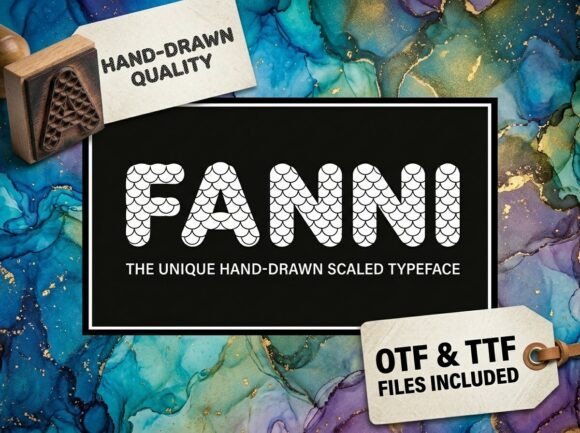
At first glance, Fanni appears to be a bold, rounded sans-serif. The geometric consistency of the letterforms ensures that the font remains grounded and professional. However, the true magic lies within the negative and positive space of each character. The letters are entirely filled with an intricate, overlapping fish-scale pattern. This internal texture is not a superficial overlay or a rasterized effect; it is integrated into the vector structure of the font itself.
This distinction matters significantly for modern design workflows. Because the texture is part of the glyph construction, Fanni scales infinitely without losing detail or becoming pixelated. Whether you are designing a small business card for a coastal boutique or a massive billboard for a maritime festival, the artisanal layer of detail remains crisp. The overlapping scales create a sense of depth and movement, mimicking the way light refracts through water or how marine life adapts to its environment. It transforms static typography into something that feels organic and alive.
Balancing Ornamentation and Legibility
One of the primary concerns when adopting textured display fonts is readability. Highly ornamental typefaces can easily become illegible at smaller sizes or when viewed from a distance. Fanni addresses this through its disciplined geometric foundation. The outer silhouette of each letter adheres to strict typographic proportions, ensuring that the eye recognizes the character shape before processing the internal detail.
The fish-scale pattern acts as a fill rather than a distortion. This means that while the font is richly detailed, the cognitive load required to read it remains low. The brain fills in the gaps effortlessly because the underlying structure is familiar and robust. This makes Fanni an exceptionally practical choice for projects where atmosphere is important, but communication cannot be sacrificed. It allows designers to inject personality into headlines and logos without forcing the audience to decipher abstract shapes.
Strategic Applications in Brand Identity
Fanni’s specific aesthetic qualities make it a powerhouse for niche industries that rely on sensory storytelling. While it is versatile enough for various creative projects, it truly shines in contexts associated with the ocean, sustainability, and artisanal craftsmanship.
- Seafood Restaurant Branding: For establishments ranging from high-end sushi bars to rustic fish markets, Fanni communicates freshness and authenticity. The texture evokes the source of the food directly, creating a subconscious link between the menu and the ocean. It works beautifully on signage, menu headers, and window decals.
- Coastal Boutique Logos: Retailers selling swimwear, surf gear, or beachside home decor benefit from the font’s blend of boldness and elegance. It avoids the cliché of generic script fonts often used in coastal branding, offering a more modern, gender-neutral alternative that feels premium.
- Maritime Editorial Headers: Magazines, blogs, and travel guides focused on marine biology, sailing, or coastal tourism can use Fanni to establish a strong visual hierarchy. The texture adds tactile interest to digital screens and print spreads alike, encouraging readers to engage with the content.
- Aquatic Product Packaging: From natural sea salt and skincare products derived from algae to sustainable fishing equipment, packaging needs to stand out on crowded shelves. Fanni provides that necessary shelf presence through its unique textural density, signaling quality and natural origin.
Integrating Fanni into Modern Design Workflows
Adopting a specialized display font requires thoughtful integration into your broader design system. Fanni is best utilized as a headline or accent typeface rather than body copy. Its complexity demands space to breathe. When pairing Fanni with other typefaces, consider contrasting it with a clean, minimalist sans-serif or a refined serif that doesn't compete for attention. A simple geometric sans-serif like Montserrat or a classic serif like Garamond allows Fanni to take center stage while ensuring the rest of the layout remains accessible and easy to scan.
Color selection also plays a pivotal role in maximizing the impact of this typeface. While Fanni looks stunning in traditional nautical blues and teals, it is equally effective in unexpected palettes. Deep corals, sandy neutrals, and even stark black-and-white contrasts can highlight the scale pattern in different ways. In darker colors, the texture recedes slightly, creating a subtle, sophisticated shimmer. In lighter or brighter hues, the overlapping scales pop forward, making the typography feel energetic and vibrant.
Technical Considerations for Print and Digital
Because Fanni relies on fine internal details, designers must be mindful of production constraints. In digital environments, ensure that the font size is large enough for the scale pattern to render clearly on standard resolution screens. On mobile devices, test the typeface extensively to confirm that the texture does not create visual noise or moiré effects against certain backgrounds.
For print applications, the quality of the substrate matters. Fanni’s intricate details are best reproduced on smooth, coated papers or high-quality vinyl. Textured papers like linen or kraft may interfere with the delicate scale pattern, muddying the visual effect. If printing on uncoated stock, consider increasing the point size slightly or using a spot UV finish to elevate the texture physically, adding a tactile dimension that complements the visual design.
Elevating Visual Storytelling Through Type
Typography is often treated as a vessel for words, but in the case of Fanni, the typeface is also a vessel for emotion. It carries the weight of the ocean, the patience of handcraftsmanship, and the precision of modern geometry. Choosing this font is a deliberate statement about brand values. It tells the audience that the brand appreciates the beauty of natural systems and has invested in a visual identity that reflects that appreciation.
For designers and art directors, Fanni offers a shortcut to establishing a cohesive thematic atmosphere. Instead of relying heavily on photography or illustration to convey an aquatic theme, the typography itself does the heavy lifting. This frees up visual real estate for other elements and creates a more unified brand experience. The font becomes a recurring motif that ties together disparate touchpoints, from social media graphics to physical storefronts.
Ultimately, the value of Fanni lies in its ability to transform standard communication into an immersive experience. It proves that functional design and artistic decoration are not mutually exclusive. By anchoring its whimsical texture in a solid geometric framework, it delivers professional results that feel both curated and natural. For any project seeking to capture the rhythmic beauty of the deep sea while maintaining commercial viability, Fanni stands as an exemplary tool in the contemporary typographic toolkit.