Cobie: Integrating Organic Display Typography into Sustainable Brand Workflows
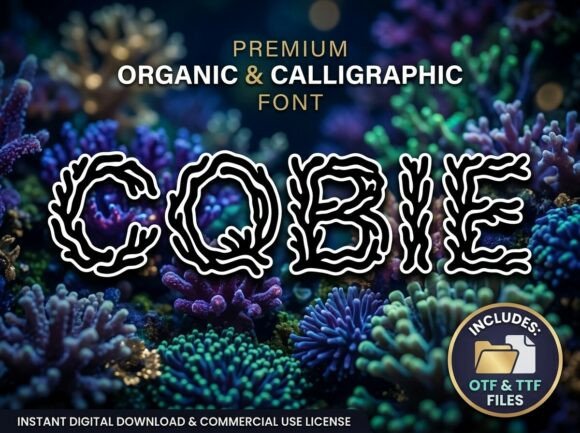
Selecting the right typeface is rarely just an aesthetic decision; it is a strategic component of visual communication that dictates how an audience perceives a brand’s values. For designers and marketers working within the marine conservation, eco-tourism, or sustainable product sectors, finding a font that balances legibility with thematic resonance is a common workflow bottleneck. Cobie addresses this specific niche by offering a premium organic display font inspired by the rhythmic, branching structures of coral reefs. Unlike standard geometric sans-serifs or traditional serifs, Cobie introduces a biological texture to typographic hierarchies, functioning as a visual anchor for projects requiring a connection to natural growth and fluid motion.
Incorporating Cobie into a design system requires understanding its role as a specialized tool rather than a universal solution. Its complex, interconnected letterforms and brain-coral texture make it ideal for high-impact touchpoints where immediate emotional engagement is necessary. However, its intricate nature demands careful planning regarding hierarchy, pairing, and technical execution. By treating Cobie as a distinct phase in the creative process—from initial mood boarding to final production preparation—creators can leverage its artisanal grace without compromising functional clarity.
Defining Cobie’s Role in the Creative Ecosystem
Cobie is best categorized as a "hero" asset within a broader typographic ecosystem. In practical workflow terms, this means it should be deployed selectively to maximize impact. The font features bold outlines filled with intricate internal patterns that mimic the calcified structures of marine life. This level of detail creates a captivating visual of natural growth, but it also imposes limitations on scalability and readability at smaller sizes. Understanding these parameters early prevents friction during the layout phase.
When planning a project, consider Cobie as the primary vehicle for tone-setting. It bridges the gap between scientific accuracy and artistic interpretation, making it particularly effective for organizations that need to communicate environmental stewardship without appearing sterile. Where a standard bold font might signal urgency or corporate authority, Cobie signals care, complexity, and organic origin. This distinction is vital for brands differentiating themselves in crowded markets like eco-friendly packaging or aquatic-themed editorial content. The typeface does not merely display text; it reinforces the narrative of sustainability through its very structure.
Pre-Project Assessment and Compatibility
Before integrating Cobie into a live project, conduct a compatibility audit. Because the letterforms rely on internal textures and fine connecting lines, the font behaves differently across various media. Digital screens with lower pixel densities may struggle to render the brain-coral texture crisply at medium sizes, while high-resolution print environments will showcase the handcrafted details effectively.
- Resolution Requirements: Verify output specifications early. For web use, test rendering across multiple viewports to ensure the intricate patterns do not create visual noise or moiré effects.
- Pairing Strategy: Cobie requires a supportive secondary typeface. Select clean, neutral sans-serifs or simple humanist serifs for body copy. Avoid decorative companions that compete with Cobie’s organic complexity.
- Color Contrast Planning: The internal texture reduces the solid ink area of each glyph. Ensure sufficient contrast ratios are maintained, especially when using lighter background colors, to preserve accessibility standards.
This preparation phase ensures that the choice of Cobie aligns with technical realities, preventing costly revisions later in the production cycle.
Implementation Across Design Touchpoints
The versatility of Cobie lies in its ability to adapt to different stages of user engagement. Its application varies significantly depending on whether the goal is instant recognition, atmospheric immersion, or tactile experience. Mapping these use cases to specific project deliverables helps streamline the design process.
Marine Conservation and Educational Branding
For non-profits and educational institutions, trust and engagement are paramount. Cobie serves as an effective header for reports, campaign landing pages, and exhibition signage. The font’s biological inspiration acts as a subconscious cue, reinforcing the subject matter before the viewer even processes the semantic meaning of the words. In this context, use Cobie for main titles and key statistics. The bold outlines provide the necessary weight for authoritative statements, while the organic interior suggests a living, breathing ecosystem worth protecting. This duality supports messaging that is both urgent and hopeful.
Aquatic-Themed Editorial and Digital Headers
Editorial designers face the challenge of maintaining reader interest across long-form content. Cobie can function as a pacing mechanism within articles or digital magazines focused on oceanography, travel, or environmental science. Use the typeface for pull quotes, chapter openers, or section breaks to create visual rhythm. The fluid motion inherent in the letterforms guides the eye naturally, breaking up dense blocks of text. When implementing this in digital workflows, consider converting headlines to SVG or outlined paths to guarantee consistent rendering of the delicate coral textures across all browsers and devices.
Eco-Friendly Packaging and Physical Products
Packaging design requires typography that survives physical constraints. Cobie’s bold structure makes it exceptionally suitable for labels, boxes, and tags where shelf presence is critical. The artisanal quality of the font communicates "handcrafted" and "natural" more effectively than minimalist modernism. During the pre-press stage, pay close attention to trapping and ink spread. The intricate internal patterns may require slight adjustments to stroke width to prevent filling in during printing, particularly on uncoated or recycled paper stocks often used in sustainable packaging. Consulting with print vendors about minimum line weights for textured fonts is a necessary step in quality control.
Tropical Event Posters and Experiential Graphics
Event branding relies on creating an immersive atmosphere. For tropical festivals, aquarium galas, or beach clean-up initiatives, Cobie establishes the thematic baseline instantly. In large-format printing, the scale allows the brain-coral texture to become a graphic element in its own right. Designers can experiment with masking photography or gradients within the letterforms, utilizing the font’s internal negative space creatively. This transforms standard signage into bespoke art pieces that attendees associate with the unique personality of the event.
Workflow Integration and Technical Best Practices
Successfully using Cobie extends beyond creative application; it involves managing the asset efficiently within team environments and production pipelines. Establishing clear guidelines ensures consistency and protects the integrity of the typeface.
Establishing Typographic Hierarchy Guidelines
Because Cobie is visually dense, it should occupy the top tier of the typographic hierarchy. Create style guides that explicitly define where Cobie is permitted and where it is prohibited. A practical rule of thumb is to restrict Cobie to display sizes above 48pt (or equivalent responsive units). Below this threshold, switch to the designated secondary typeface. Documenting these breakpoints prevents junior designers or external freelancers from misusing the font in ways that degrade legibility or brand perception.
File Management and Asset Organization
Premium display fonts like Cobie often include alternate characters, ligatures, or stylistic sets that enhance the organic feel. Organize these assets logically within your design software libraries. If working in Figma or similar collaborative tools, create dedicated components for Cobie headlines that include pre-set tracking and leading values. The interconnected nature of the letterforms often requires tighter tracking than standard fonts to maintain the illusion of continuous growth. Baking these adjustments into reusable components saves time and ensures uniformity across multiple artboards and team members.
Accessibility and Legibility Checks
While Cobie is a display font, accessibility remains a professional responsibility. The textured interior can sometimes reduce character recognition for users with visual impairments. Always pair Cobie headlines with accessible alt text or semantic HTML tags that convey the message independently of the visual styling. In video or motion graphics, avoid animating the internal texture excessively, as this can cause vestibular issues. Instead, animate the bold outer contours or use fade-ins to respect both the font’s aesthetic and user safety.
Long-Term Value and Brand Consistency
Adopting a distinctive typeface like Cobie is a long-term commitment to a specific brand voice. Over time, the font becomes synonymous with the organization’s identity. To maintain this value, resist the urge to modify the font files directly unless absolutely necessary for technical correction. Instead, leverage the font’s innate characteristics through thoughtful layout and color application. Regularly audit existing collateral to ensure Cobie is still being applied according to established guidelines and that it continues to align with evolving brand objectives.
Ultimately, Cobie offers more than decorative flair; it provides a structured approach to visualizing nature-inspired themes. By respecting its technical requirements and integrating it thoughtfully into planning, execution, and quality assurance phases, professionals can transform ordinary headlines into legendary visual statements. The result is a cohesive, memorable identity that resonates deeply with audiences who value authenticity, craftsmanship, and the enduring beauty of the natural world.