Bremer: Precision in Modern Geometric Typography
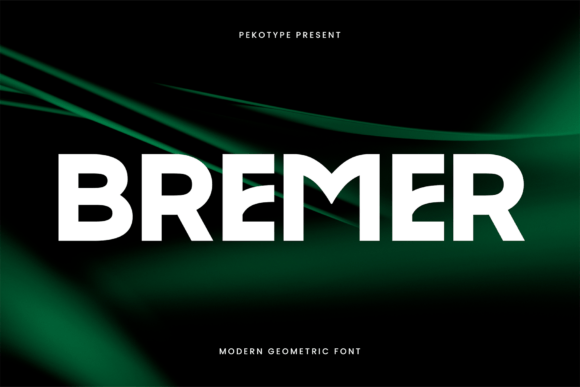
In a digital landscape saturated with visual noise, clarity is not just an aesthetic choice; it is a functional necessity. Bremer arrives as a modern geometric typeface specifically engineered to cut through that clutter without sacrificing warmth or approachability. While many geometric fonts lean heavily into rigid mathematical perfection, often resulting in a sterile or cold appearance, Bremer strikes a deliberate balance. It offers the structured confidence of sharp lines and balanced proportions while retaining enough humanist nuance to remain inviting. For designers and brand strategists navigating the demands of contemporary media, this typeface represents a shift toward precision that feels organic rather than manufactured.
The visual personality of Bremer is rooted in its commitment to structure. Every curve and terminal has been calculated to maintain consistent stroke width and optical alignment, ensuring that the font performs reliably across varying sizes. This level of craftsmanship makes it distinct from standard system sans serif fonts that often lack character at display sizes. When used in headlines, Bremer commands attention through stability rather than aggression. In body copy, its open apertures and generous x-height facilitate smooth reading rhythms, proving that a display font can successfully double as a workhorse for longer editorial content. It embodies the essence of modern typography: efficient, legible, and inherently professional.
Strategic Applications Across Digital and Print Media
Versatility is the primary metric by which commercial fonts are judged today, and Bremer excels by adapting to diverse environmental contexts. Its geometric construction makes it a natural fit for technology sectors, fintech platforms, and innovative startups where trust and forward-thinking aesthetics are paramount. However, limiting Bremer to tech would be a disservice to its range. The typeface carries a neutral sophistication that translates beautifully into lifestyle branding, architectural portfolios, and high-end packaging design. Unlike a script font or handwritten font that dictates a specific mood, Bremer acts as a flexible container for brand messaging, allowing the content itself to define the tone.
For web design and user interface projects, Bremer’s readability is its strongest asset. Digital screens demand typefaces that render crisply at low resolutions, and Bremer’s simplified forms prevent pixelation or blurring on mobile devices. This makes it an excellent candidate for navigation menus, app interfaces, and data-heavy dashboards where legibility directly impacts user experience. In print applications, such as annual reports or exhibition posters, the font’s precise geometry creates a strong visual hierarchy. Designers can utilize weight variations to guide the reader’s eye through complex information architectures without needing excessive decorative elements. Whether applied to social media graphics requiring instant impact or corporate identities demanding long-term longevity, Bremer maintains a cohesive visual thread.
Elevating Brand Perception Through Typographic Consistency
Typography is often the subconscious voice of a brand identity. Choosing Bremer signals to an audience that an organization values order, transparency, and innovation. In an era where consumers are increasingly skeptical of over-designed marketing, the honest structure of a geometric sans serif font builds credibility. It avoids the pretension sometimes associated with elaborate serif fonts while offering more distinction than generic alternatives. This psychological impact is crucial for entrepreneurs and marketers aiming to establish authority in competitive niches. The font does not shout; it states facts with confidence, creating a sense of reliability that fosters audience engagement and retention.
Consistency across touchpoints is another area where Bremer delivers tangible value. A brand might use the typeface for a large-scale billboard campaign and simultaneously within a dense technical manual. Because the letterforms are designed with both macro and micro legibility in mind, the transition between these mediums feels seamless. This uniformity strengthens brand recognition, as customers begin to associate the specific cadence and shape of Bremer’s characters with the company’s products or services. For small business owners managing limited resources, having a single premium font that handles both creative marketing and operational documentation reduces the need for multiple licensing agreements and simplifies brand guidelines.
Practical Guidance for Implementation and Pairing
Selecting the right typeface involves more than just admiring the specimen sheet; it requires rigorous testing within the actual project environment. When evaluating Bremer, designers should test it at the smallest intended size to ensure the geometric precision does not compromise legibility. While the font is optimized for screen and print, specific tracking adjustments may be necessary depending on the background color and contrast ratios. Dark mode implementations, for example, often require slightly looser tracking to prevent light bleed from closing up the counters of the letters. These subtle refinements distinguish professional typesetting from amateur layout work.
Font pairing is where Bremer truly demonstrates its collaborative nature. As a dominant display font, it pairs exceptionally well with highly readable text faces that share similar vertical metrics but offer contrasting textures. Consider combining Bremer with a clean neo-grotesque sans serif for body copy to maintain a unified modern aesthetic, or contrast it with a refined serif font for editorial layouts that require a blend of tradition and innovation. Avoid pairing it with other geometric typefaces that have similar proportions, as this creates visual redundancy rather than harmony. Instead, look for complementary design assets that provide functional contrast. For instance, if Bremer is used for bold, uppercase headers, a lighter weight humanist sans serif can soften the overall composition for extended reading sections.
- Licensing Verification: Always review the specific license terms included with the OTF and TTF files. Ensure your commercial font license covers all intended mediums, including web embedding, app usage, and merchandise, to avoid future legal complications.
- Multilingual Testing: Bremer includes extensive multilingual support, but designers should verify glyph coverage for specific target markets. Test accented characters and special punctuation to ensure they match the baseline quality of the core Latin set.
- Hierarchy Establishment: Utilize the full range of weights and symbols to create depth. Relying solely on size changes can flatten a design; instead, use weight contrast and spacing to establish clear entry points for the reader.
- Contextual Evaluation: Assess the font against competitor visuals in your industry. If every other brand uses a rounded, friendly sans serif, Bremer’s sharper geometry could provide necessary differentiation. Conversely, if the market is dominated by stark minimalism, consider how to warm up the presentation through color and imagery.
Ultimately, Bremer serves as a foundational tool for creators who understand that good design is invisible. It supports the message without becoming the message itself. Whether you are crafting a logo design that needs to scale from a favicon to a storefront, or laying out a comprehensive brand book, this typeface provides the structural integrity required for professional results. By prioritizing clarity and efficiency, Bremer allows designers to focus on solving communication problems rather than fighting with illegible or inappropriate letterforms. It is a testament to the enduring power of geometric precision when executed with intention and care, making it a reliable partner for any forward-thinking creative project.