Gummy Pop: A Playful Display Font for Modern Design
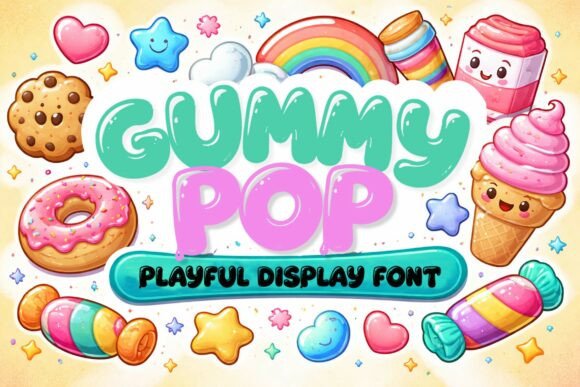
In the crowded landscape of digital and print design, typography often serves as the primary emotional hook. While clean sans-serifs and traditional serifs have their place in corporate communication, there is a distinct need for typefaces that convey warmth, approachability, and joy without sacrificing professional polish. Gummy Pop fills this specific niche as a bold, playful display font inspired by soft jelly shapes and bubbly forms. It offers designers a tool to inject personality into projects where standard geometric fonts feel too sterile or aggressive.
This typeface is not merely decorative; it is a strategic asset for brands targeting younger demographics or seeking to soften their visual identity. With its rounded edges and smooth, puffy structure, Gummy Pop delivers a fun, friendly, and eye-catching look perfect for modern creative designs. Understanding how to leverage this aesthetic effectively can transform a generic layout into a memorable brand experience.
The Anatomy of Soft Typography
To use Gummy Pop effectively, one must understand the design principles that make it work. Unlike sharp-edged grotesques that command authority through precision, this font relies on volume and curvature to establish presence. The letterforms mimic the physical properties of gelatin and inflated balloons, creating a subconscious association with softness, safety, and tactile satisfaction.
This "puffy" structure does more than look cute; it improves accessibility in specific contexts. Rounded terminals and open counters reduce visual tension, making headlines feel inviting rather than demanding. For adult designers working on products for children or wellness brands, this reduction in visual friction is crucial. It signals to the viewer that the content is safe, enjoyable, and low-stress. However, because of these exaggerated proportions, it functions strictly as a display face. Attempting to use it for body copy will destroy readability and undermine the user experience.
Strategic Applications in Food and Beverage Branding
The most immediate application for Gummy Pop lies within the culinary sector. Food branding has shifted away from clinical minimalism toward sensory-rich visuals that evoke taste and texture. This typeface aligns perfectly with products that are sweet, organic, or artisanal. Consider a boutique bakery launching a new line of pastries or a beverage company introducing a sparkling fruit soda. The rounded weight of the letters mirrors the mouthfeel of the product itself.
When designing packaging, legibility at small scales remains a priority even with display fonts. Gummy Pop maintains its integrity on shelf tags and nutritional panels when used sparingly for flavor callouts or promotional badges. Its bold nature ensures high contrast against colorful backgrounds, which is essential for retail environments where split-second purchasing decisions occur. Designers should pair it with a highly readable sans-serif for ingredients and legal text to create a balanced hierarchy that satisfies both marketing goals and regulatory requirements.
Elevating Kids’ Products and Educational Materials
Designing for children requires a delicate balance between engagement and clarity. Parents and educators seek materials that feel stimulating but not chaotic. Gummy Pop provides a mature take on juvenile aesthetics, avoiding the amateurish quality that sometimes plagues kids' design. It works exceptionally well for book covers, educational app interfaces, and toy packaging.
In educational settings, typography influences learning outcomes. Friendly typefaces can reduce anxiety in early readers and make instructional materials feel more like play than work. When used in worksheets, flashcards, or classroom signage, Gummy Pop helps create a welcoming environment. For commercial products like board games or children’s apparel, the font adds a premium handmade quality that distinguishes mass-market items from thoughtful, design-led goods. It suggests that the product was crafted with care, appealing to millennial and Gen Z parents who value aesthetics alongside utility.
Digital Engagement and Social Media Presence
Social media algorithms favor content that stops the scroll, and typography plays a massive role in that initial capture. In an era of templated Instagram stories and TikTok overlays, custom typographic treatment stands out. Gummy Pop is ideally suited for short-form video captions, YouTube thumbnails, and social media announcements where energy is paramount.
The font’s inherent playfulness translates well to motion graphics. Because the letterforms are already suggestive of movement and elasticity, they animate beautifully. Kinetic typography using Gummy Pop can add a layer of entertainment value to otherwise static information. For influencers and content creators, establishing a consistent typographic voice helps build brand recognition. Using this font consistently across posts creates a cohesive visual thread that followers begin to associate with your specific tone and personality.
Practical Pairing and Hierarchy Guidelines
A common mistake when using expressive display fonts is failing to provide adequate support. Gummy Pop is a soloist, not a choir member. It demands negative space and contrasting companions. Here are practical recommendations for implementation:
- Contrast Weight: Always pair with light or regular-weight body fonts. A heavy display font next to a bold sans-serif creates visual mud. Let Gummy Pop carry the weight while supporting text remains airy.
- Geometric Harmony: Since Gummy Pop is inherently round, pairing it with a geometric sans-serif (like Futura or Century Gothic) reinforces the modern aesthetic. Conversely, a humanist sans-serif can add a touch of organic warmth if the goal is a softer vibe.
- Color Strategy: The font’s volume absorbs color differently than thin lines. Saturated, vibrant hues enhance the jelly-like effect, while pastels emphasize softness. Avoid dark grey or black on white backgrounds for large headlines; opt for deep blues, purples, or warm terracottas to maintain the friendly atmosphere.
- Spacing Adjustments: Display fonts often require tighter tracking than body text to feel cohesive. Experiment with reducing letter-spacing slightly to make the word shapes feel more solid and bubble-like, but avoid overlapping unless intentional for stylistic effect.
Evaluating Suitability for Your Project
Before committing to Gummy Pop, assess whether your project’s tone aligns with its characteristics. It is inappropriate for luxury fashion, financial services, legal documentation, or somber memorial content. The font carries an irreverent energy that can undermine seriousness. However, for tech startups focusing on mental health, pet care brands, community events, or lifestyle blogs, it acts as a powerful differentiator.
Consider also the technical environment. If designing for web, ensure you have access to web-safe alternatives or proper licensing for embedding. The complex curves of Gummy Pop require high-quality rendering; low-resolution screens may alias the smooth edges, diminishing the intended effect. Always test your typographic choices across multiple devices and sizes to ensure the playful personality translates without compromising function.
Ultimately, typography is about communication efficiency. Gummy Pop communicates joy, softness, and approachability faster than any paragraph of explanatory text could. By understanding its strengths and respecting its limitations, designers can harness this bold, bubbly typeface to create work that resonates emotionally with audiences while maintaining professional standards. It is a reminder that in a digital world often dominated by rigidity, there is immense value in softness.