Buena: A Botanical Display Font for Modern Luxury Branding
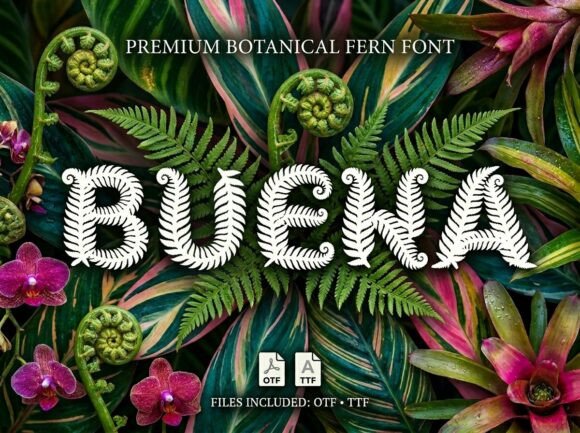
In the crowded landscape of digital design and brand identity, finding a typeface that communicates both heritage and contemporary relevance is a significant challenge. Designers and business owners often struggle to balance ornamental beauty with functional clarity. Enter Buena, a breathtaking display font that captures a lush-and-layered soul. Unlike standard serif or sans-serif options that prioritize neutrality, Buena offers a distinct narrative voice through its intricate, hand-illustrated letterforms. It is uniquely characterized by rhythmic fern fronds and spiraling fiddlehead terminals that bridge the gap between Victorian botanical studies and modern luxury branding.
For independent wellness boutiques, tropical resorts, and premium organic brands, typography is not merely a vehicle for text; it is the primary visual cue for quality and atmosphere. This article explores the practical applications, aesthetic nuances, and strategic considerations of integrating Buena into your next creative project. Whether you are designing product packaging or curating a social media presence, understanding the specific strengths of this typeface will help you determine if it aligns with your brand’s vision.
The Intersection of Historical Illustration and Contemporary Design
To understand the value of Buena, one must first appreciate its stylistic lineage. The font does not mimic the clean lines of Swiss design or the geometric rigidity of Art Deco. Instead, it draws heavily from 19th-century naturalist illustrations, where scientific accuracy met artistic flourish. However, applying a purely historical font to a modern website or product label can often result in a design that feels dated or costumey. Buena avoids this pitfall through careful structural refinement.
The typeface maintains a dense structural weight that anchors the ornate details. This density provides the necessary contrast against white space, ensuring that the botanical elements read as intentional design choices rather than accidental clutter. The spiraling fiddlehead terminals serve as connective tissue between letters, creating a sense of flow and organic growth. For designers, this means the font performs double duty: it acts as a logotype while simultaneously functioning as an illustrative element, potentially reducing the need for additional graphic assets.
Key Visual Characteristics
- Rhythmic Fern Fronds: The integration of foliage is not random; it follows the natural stress and axis of the letterforms, maintaining legibility while adding texture.
- Spiraling Terminals: These flourishes soften the edges of words, making the brand voice feel more approachable and less corporate.
- Dense Weight: Provides high impact at large sizes, essential for headers and packaging where visibility is paramount.
- Hand-Illustrated Feel: Avoids the sterile perfection of vector-generated curves, retaining the warmth of human craftsmanship.
Strategic Applications: Where Buena Thrives
While versatile within its niche, Buena is a specialized tool. Its ornamental personality makes it unsuitable for body copy or data-heavy interfaces. However, in specific contexts, it elevates the perceived value of a product or service significantly. Understanding these use cases helps creators deploy the font effectively.
Independent Wellness Boutique Identities
The wellness industry relies heavily on signaling tranquility, nature, and holistic care. Generic sans-serifs can sometimes feel too clinical or tech-adjacent for a spa or yoga studio. Buena introduces a tactile quality that suggests grounding and earthiness. When used in signage or business cards for a wellness boutique, the fern motifs subtly reinforce the connection to natural ingredients and organic processes without needing explicit iconography. The font implies that the business is rooted in tradition yet curated for a modern clientele seeking respite.
Boutique Tropical Resort Logos
Hospitality branding in the luxury travel sector must evoke a sense of place before the guest even arrives. Buena’s lush aesthetic is tailor-made for boutique tropical resorts that differentiate themselves through biodiversity and immersive experiences. Unlike generic palm tree clip art, which can cheapen a brand's image, the sophisticated botanical integration in Buena signals high-end exclusivity. It works exceptionally well for welcome signage, embroidered linens, and upscale menu covers, setting a tone of refined relaxation.
Premium Organic Product Packaging
On a retail shelf, packaging has milliseconds to communicate quality. For premium organic products—such as artisanal teas, botanical skincare, or small-batch spirits—the typography must justify a higher price point. Buena’s intricate details reward close inspection, encouraging consumers to pick up the product and engage with it. The dense weight ensures readability against textured paper or matte finishes common in sustainable packaging. Furthermore, the hand-drawn quality aligns perfectly with the "small batch" and "handcrafted" narratives that drive sales in this category.
High-Impact Social Media Headers
In the digital realm, attention spans are fleeting. Social media headers and story titles require immediate visual arrest. Buena serves as a powerful hook in these environments. Because the letterforms are so detailed, they remain crisp and striking even when scaled down for mobile screens. Content creators focusing on slow living, gardening, sustainable fashion, or luxury travel can use Buena to create a cohesive visual language that stands out against the minimalist trends dominating social feeds.
Evaluating Suitability: Strengths and Considerations
Adopting a display font with such a strong personality requires careful evaluation. While Buena is a premier choice for many, it is not a universal solution. Professionals should weigh the following factors to ensure successful implementation.
Legibility vs. Ornamentation
The primary consideration when using any decorative typeface is legibility. Buena strikes a commendable balance, but its complexity demands respect. It is designed for display purposes only. Attempting to use it for paragraphs, captions, or fine print will result in visual noise and poor user experience. Always pair Buena with a clean, neutral sans-serif or a simple serif for supporting text. This contrast allows Buena to shine as the protagonist while ensuring the rest of the content remains accessible.
Brand Voice Alignment
Buena communicates specific attributes: femininity, softness, history, and nature. If your brand identity is industrial, futuristic, aggressive, or strictly minimalist, this typeface may create cognitive dissonance. Evaluate your brand adjectives carefully. If words like "lush," "organic," "bespoke," or "heritage" appear in your brief, Buena is likely a strong candidate. If your keywords are "efficient," "tech-forward," or "corporate," look elsewhere.
Technical Implementation
When using Buena in web environments, consider load times and rendering. Highly detailed fonts can have larger file sizes. Ensure you are serving optimized web font formats (WOFF2) to maintain site performance. Additionally, test the font across different operating systems and browsers. Intricate terminals and fronds can sometimes render poorly on low-resolution screens or older devices. Having a robust fallback stack is essential to preserve the design intent if the custom font fails to load.
Unfurl Your Creative Vision with Intention
Typography is the clothing your words wear. In an era of AI-generated imagery and template-based design, choosing a typeface with genuine artistic integrity like Buena is a statement of differentiation. It tells your audience that you value craft, detail, and the organic beauty of the natural world.
However, the true power of Buena lies not just in its aesthetics, but in how it is applied. It requires a designer or business owner who understands restraint. By limiting its use to headlines, logos, and key touchpoints, you allow the font to breathe and perform its intended function: capturing a lush-and-layered soul that resonates with viewers on an emotional level.
Whether you are launching a new line of botanical serums, rebranding a heritage hotel, or simply looking to add a touch of verdant luxury to your digital portfolio, Buena offers a unique vocabulary. It bridges the past and present, proving that ornamentation and modernity are not mutually exclusive. As you evaluate typefaces for your next project, ask yourself if your brand needs to speak quietly or sing with the rhythm of fern fronds. If the answer is the latter, Buena provides the perfect medium to unfurl your creative vision.
Practical Checklist for Implementation
- Define Hierarchy: Reserve Buena strictly for H1s, logos, and pull quotes. Never use below 24px size.
- Select Pairings: Choose a supporting typeface with open counters and generous x-height to balance Buena’s density.
- Test Color Contrast: The intricate details can get lost in low-contrast scenarios. Ensure WCAG compliance for accessibility.
- Check Licensing: Verify that your license covers all intended uses, including web embedding, app usage, and merchandise.
- Gather Feedback: Test mockups with your target audience to ensure the ornamental style reads as "premium" rather than "cluttered."
By approaching Buena with both enthusiasm and discipline, you transform a beautiful font into a strategic asset. It becomes more than just letters on a page; it becomes the visual embodiment of a brand that cherishes the intricate, the natural, and the beautifully crafted.