Arena Graffiti: Bringing Authentic Street Energy to Modern Design
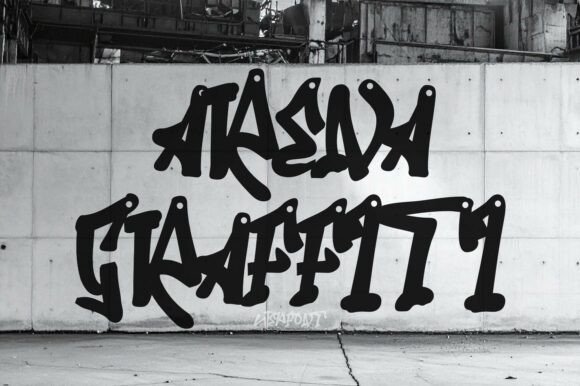
There is a distinct moment in every creative project when you realize that clean, geometric sans-serifs simply cannot carry the emotional weight of your message. When the brief calls for rebellion, raw energy, or an unfiltered urban voice, standard typography often feels too sanitized. This is where Arena Graffiti steps in. It is not merely a decorative font; it is a stylistic instrument designed to replicate the visceral impact of hand-painted street art. Unlike digital fonts that simulate grunge through automated filters, Arena Graffiti embodies the deliberate drips, sharp angles, and spontaneous movement of actual spray-can lettering.
For designers, brand managers, and artists working within youth-oriented or counter-culture spaces, this typeface offers a shortcut to authenticity. It captures the confident, unbridled spirit of graffiti culture without requiring you to hand-letter every headline from scratch. However, leveraging this aesthetic effectively requires understanding not just what the font looks like, but how it functions in real-world applications where legibility and attitude must coexist.
Elevating Streetwear and Apparel Branding
The most immediate application for Arena Graffiti lies in fashion, specifically within the streetwear and skateboarding sectors. In these industries, typography is rarely just a label; it is a graphic element that defines the garment's silhouette. Consider the design of a hoodie featuring the phrase URBAN THUGZ. Using a standard bold font might make the text readable, but it fails to communicate the subcultural context. Arena Graffiti transforms those words into a visual texture that mirrors the fabric’s purpose.
The font’s inherent sense of movement works exceptionally well on apparel because clothing is dynamic. As a wearer moves, the sharp angles and dripping forms of the letterforms interact with the folds and drape of the material. For skateboard deck graphics, such as a board titled LET’S ROAST VIBES, the aggressive stance of the characters complements the physical abrasion associated with skating. The typeface suggests speed and friction before the board even touches pavement. Designers in this space benefit from the font’s uppercase-only structure, which naturally encourages stacked layouts and blocky compositions that maximize print area on chests, backs, and deck undersides.
Music Artwork and Event Promotion
Beyond merchandise, Arena Graffiti serves as a powerful anchor for music and event marketing. Album covers and concert posters operate in a highly saturated visual environment where they must grab attention in a fraction of a second. The distinctive hand-painted aesthetic of this display font cuts through digital noise by offering something that feels tactile and human-made.
For hip-hop, punk, or electronic music releases, the font communicates genre expectations instantly. A bold ARENA GRAFFITI title treatment on a mixtape cover signals to the listener that the content inside is raw and unpolished. Similarly, event posters for underground shows or street festivals utilize the font’s density to create hierarchy. Because the letterforms are visually heavy, they function almost like shapes or textures, allowing designers to layer them over photography or abstract backgrounds without losing contrast. The "in-your-face" attitude ensures that critical information like venue names or artist lineups resonates with an audience that values authenticity over corporate polish.
Navigating Legibility and Hierarchy
While the rebellious nature of Arena Graffiti is its greatest strength, it also dictates strict usage parameters. This is a display font in the truest sense, meaning it is engineered for impact at large sizes rather than extended reading. Understanding this limitation is crucial for maintaining professional quality in your work.
- Reserve for Headlines: Use Arena Graffiti exclusively for titles, logos, short phrases, or call-out text. Attempting to use it for body copy or detailed instructions will result in illegibility and visual fatigue.
- Mind the Drips: The deliberate drips and sharp angles extend beyond the standard baseline and cap height. Always account for this extra vertical space during layout to prevent clipping or awkward overlaps with adjacent elements.
- Pair with Neutrals: To let the graffiti aesthetic shine, pair it with clean, minimalist sans-serif or monospaced fonts for supporting text. High-contrast pairing prevents the design from becoming chaotic and ensures essential information remains accessible.
- Check Spacing: Graffiti-style fonts often have unique kerning requirements. Manually adjust tracking to ensure the interlocking angles feel intentional rather than accidental, especially when scaling up for billboards or large-format prints.
By treating Arena Graffiti as a focal point rather than a utility, you preserve its edgy appeal while ensuring the overall design remains functional. The goal is to capture the vibe of street art without sacrificing the communication standards required in commercial design.
Authenticity in Commercial Contexts
One of the primary challenges for brands targeting urban demographics is avoiding the appearance of cultural appropriation or forced trend-chasing. Typography plays a significant role in this perception. Many "grunge" or "street" fonts feel derivative because they rely on repetitive distress textures that look manufactured. Arena Graffiti mitigates this risk through its specific construction. The sharp angles and confident strokes suggest a writer who knows their craft, rather than a designer applying a noise filter.
When used for messages like a bold THANK YOU at the end of a campaign or video, the font conveys genuine gratitude wrapped in cultural respect. It tells the audience that the brand understands the visual language of the street, rather than simply borrowing it. This nuance is particularly important for businesses operating in lifestyle marketing, where credibility is earned through consistent, respectful engagement with the culture’s aesthetics. The font provides a vocabulary that feels native to the environment, helping bridge the gap between commercial intent and authentic expression.
Technical Versatility Across Media
The practical value of Arena Graffiti extends to its technical adaptability. Despite its complex, hand-drawn appearance, the vector-based construction ensures it scales cleanly from social media thumbnails to massive mural-sized prints. This scalability is vital for modern campaigns that span multiple touchpoints. A logo lockup created in Arena Graffiti for an Instagram story retains its integrity when blown up for a pop-up shop banner or embroidered onto a cap.
Furthermore, the inclusion of a full set of numerals and essential punctuation allows for comprehensive branding systems. You are not limited to alphabetic titles; you can incorporate dates, prices, edition numbers, and social handles without breaking the visual style. This completeness makes it a viable primary display face for entire campaigns rather than just a one-off accent. Whether you are designing packaging for energy drinks, creating overlays for streaming content, or developing signage for an urban retail space, the font maintains its character across different resolutions and substrates.
Ultimately, Arena Graffiti is a tool for storytellers who need their typography to shout rather than whisper. It bridges the gap between the spontaneous energy of street art and the precision required in professional design. By respecting its limitations and leveraging its strengths in appropriate contexts, creatives can harness the raw power of graffiti culture to produce work that is both visually arresting and culturally resonant. The font does not just display text; it performs it, turning every headline into a statement of intent that demands to be seen and felt.